Glass and installation
Laminated, toughened, tinted or acid-etched glass, cut to size and fitted by our teams. Without hardware.
The product
Glass alone, to site dimensions
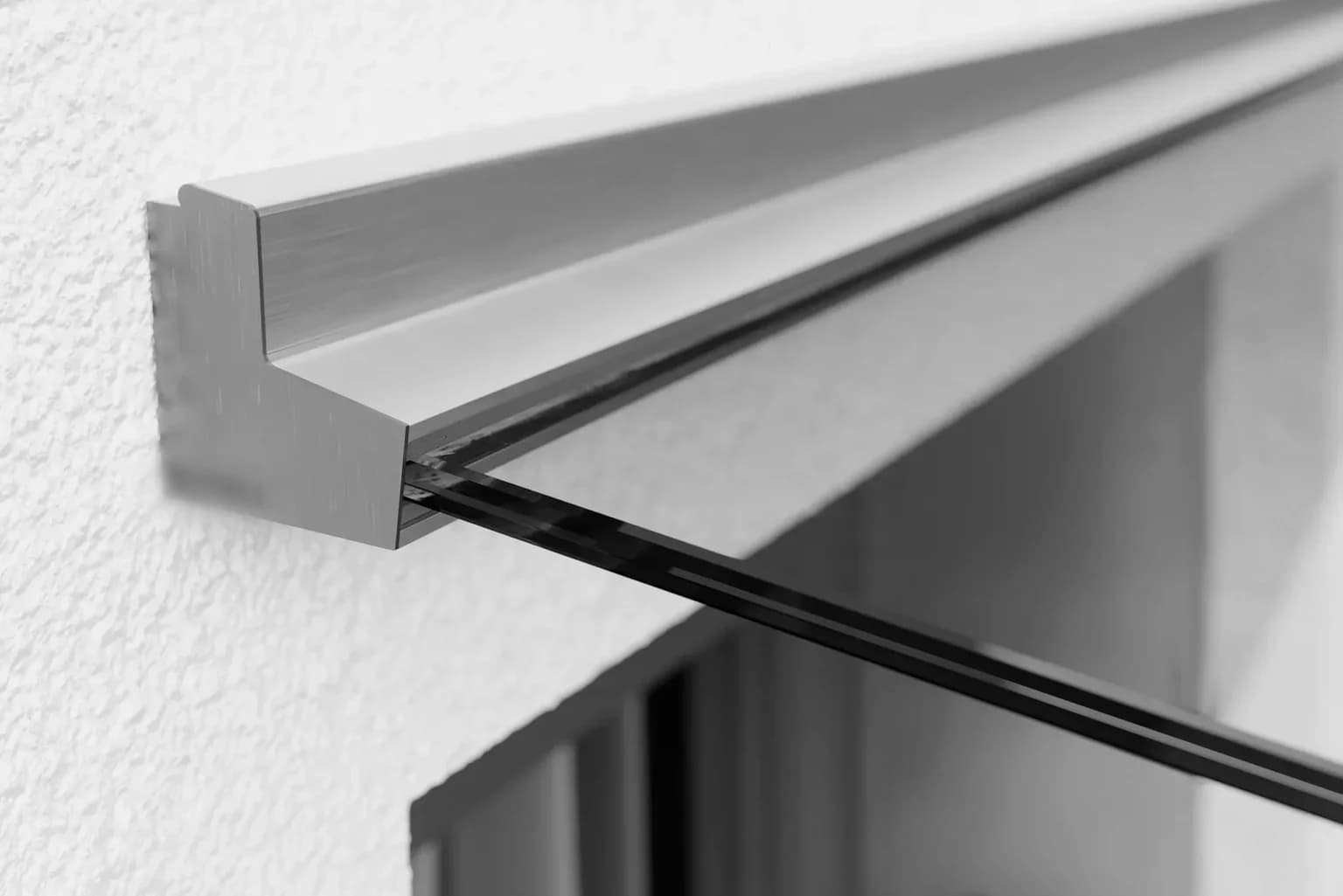
No hardware: a build-up, finished edges, a stated tolerance.
Selling bare glass means selling a dimension. Everything else — the tint, the edge, the drilling — follows from what is written on the order, and nothing can be corrected afterwards: laminated or toughened glass cannot be recut, drilled or ground once it has left the furnace. That is why we survey on site, why we make a full-size template for anything that is not rectangular, and why we put the tolerance on the order rather than discovering it on delivery.
The build-up is written in the number. 12.76 mm is two panes of 6 mm and a 0.76 mm interlayer; 16.76 mm, two panes of 8 mm and the same interlayer; 21.52 mm, two panes of 10 mm and 1.52 mm of interlayer, that is four 0.38 films. The figure after the decimal point always gives the interlayer, the one before gives the panes. Once you can read it, a glazier's quote becomes checkable.
Three heat treatments, three breakage behaviours. Annealed is raw float, resisting around 45 N/mm², which breaks into sharp shards: excluded from safety applications. Heat-strengthened (around 70 N/mm²) breaks into large pieces held by the interlayer, which gives the panel residual capacity after breakage — the best choice in a laminated balustrade. Toughened (around 120 N/mm²) fragments into small non-cutting pieces: ideal in a shower and monolithic, but a toughened laminate broken in both plies sags.
The interlayer, in turn, decides the stiffness. Standard PVB is soft: under long-term load and high heat the panel creeps and deflects. A so-called stiff PVB moves up a level. EVA copes better with moisture, which matters in damp zones and on exposed edges. Ionoplast — SentryGlas being the common representative — is a different material: far stiffer and much more tear-resistant, it allows thickness to be reduced at equal performance, or a balustrade to be held after one ply has broken. It costs appreciably more per square metre, and in public buildings it is often what makes the project feasible.
- Laminated with PVB, EVA or ionoplast; toughened, heat-strengthened or annealed
- From 8 mm monolithic to 31.52 mm laminated
- Low-iron, bronze or grey tinted, opal, acid-etched or sandblasted
- Arrised, industrially polished or bright polished edges
- Drillings and notches before toughening; curved to template from a 1 m radius
Compare
Choosing your glazing
These are not profiles but build-ups: the «load» and «spacing» columns stay empty, because load is a property of the assembly and its fixing, not of the glass. Read «mill» as deliverable with a raw cut edge — therefore destined to disappear into a channel — «bendable» as available curved to template from a 1 metre radius, and ignore «anodised», which concerns metal only.
| Model | Application | Glass thickness | Approved load | Fixing centres | Lengths | Mill finish | Anodised | Curvable |
|---|---|---|---|---|---|---|---|---|
| VR-10Monolithic toughened | Shower, partition, infill with no risk of falling | 8 et 10 mm | — | — | Coupé à la cote | |||
| VR-20PVB laminated 10.76 mm (2 × 5 + 0.76) | Post or clamp balustrade, division | 10,76 mm | — | — | Coupé à la cote | |||
| VR-30PVB laminated 12.76 mm (2 × 6 + 0.76) | Parapet-mounted balustrade, glass clamp | 12,76 mm | — | — | Coupé à la cote | |||
| VR-40PVB laminated 16.76 mm (2 × 8 + 0.76) | Cast-in structural glass balustrade | 16,76 mm | — | — | Coupé à la cote | |||
| VR-50Ionoplast laminated 21.52 mm (2 × 10 + 1.52) | Public buildings, high load, great height | 21,52 mm | — | — | Coupé à la cote | |||
| VR-60Tinted, opal or etched laminated | Balcony division, partition, privacy screen | 13,52 – 17,52 mm | — | — | Coupé à la cote |
The loads shown are those the system is approved for. Final sizing depends on the use of the space and the wind pressure at the site — that is what we check during the survey.
Downloads
The documents for this range
A4 data sheets, one per profile: vertical section, dimensions, finishes. Final dimensions are set at the site survey.
- VR-10Monolithic toughened
- VR-20PVB laminated 10.76 mm (2 × 5 + 0.76)
- VR-30PVB laminated 12.76 mm (2 × 6 + 0.76)
- VR-40PVB laminated 16.76 mm (2 × 8 + 0.76)
- VR-50Ionoplast laminated 21.52 mm (2 × 10 + 1.52)
- VR-60Tinted, opal or etched laminated
Non-contractual documents · Current edition
Finish
Edge and surface finishes
The edge is chosen on how much of it will be seen. Raw cut where it disappears into a channel: it is the cheapest, and there is no reason to pay more. Arrised as soon as a hand can brush it during installation. Industrially polished where the edge stays visible — a matt, even surface, the standard finish for a balcony division. Bright polished where the edge is part of the design: on low-iron glass, that is exactly where the price difference shows.
On the surface, etching exists in two processes that are nothing alike. Acid etching gives a very even satin, soft to the touch, which does not hold fingermarks. Sandblasting is grainier, cheaper, and it marks. Tints, meanwhile, are either in the body — bronze, grey — or in the interlayer: a laminate with an opal film gives a homogeneous milky white that no tinted float reproduces, and that is what is used on balcony divisions when privacy is needed without losing the light.
- .BC
- Raw cut edge
- .AR
- Arrised edges
- .PI
- Industrially polished edge, matt
- .PB
- Bright polished edge
- .AC
- Acid-etched, satin
- .SA
- Sandblasted
- .XC
- Low-iron, extra clear
- .OP
- Opal laminated, white interlayer
The drawing
Drawn before it is installed
Every piece starts from a workshop drawing dimensioned to the half-millimetre. That is what guarantees a true line once on site.
Installed
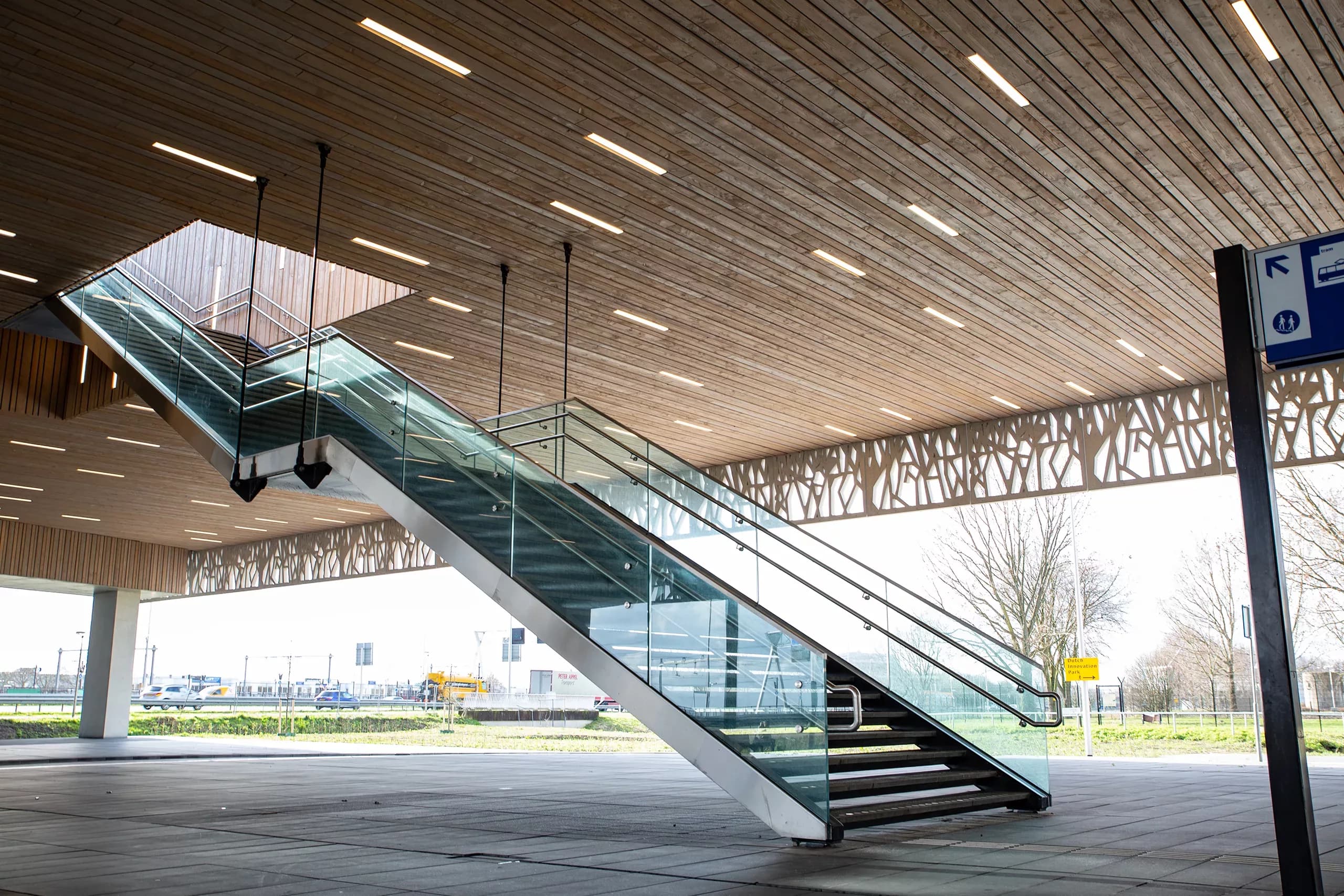
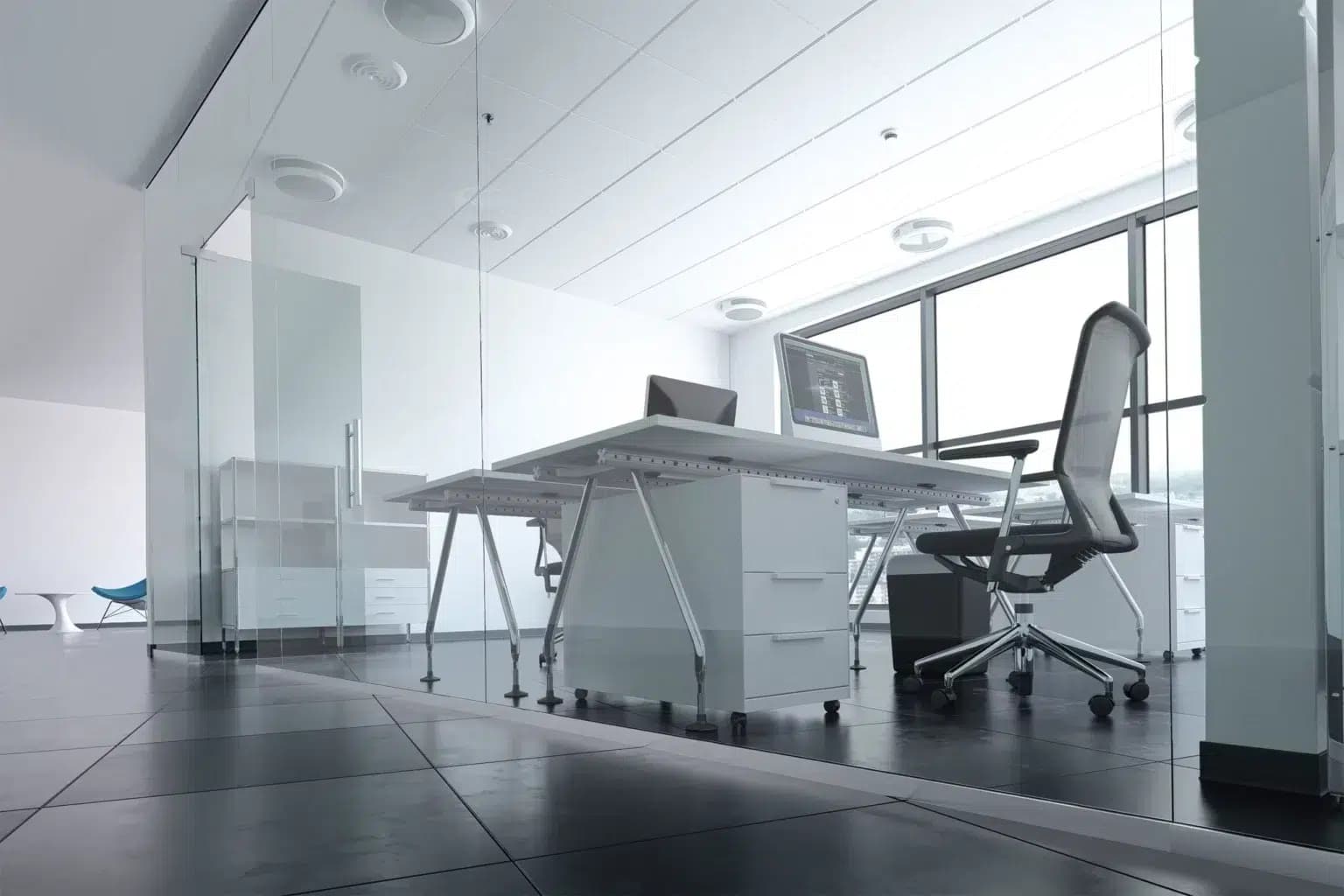
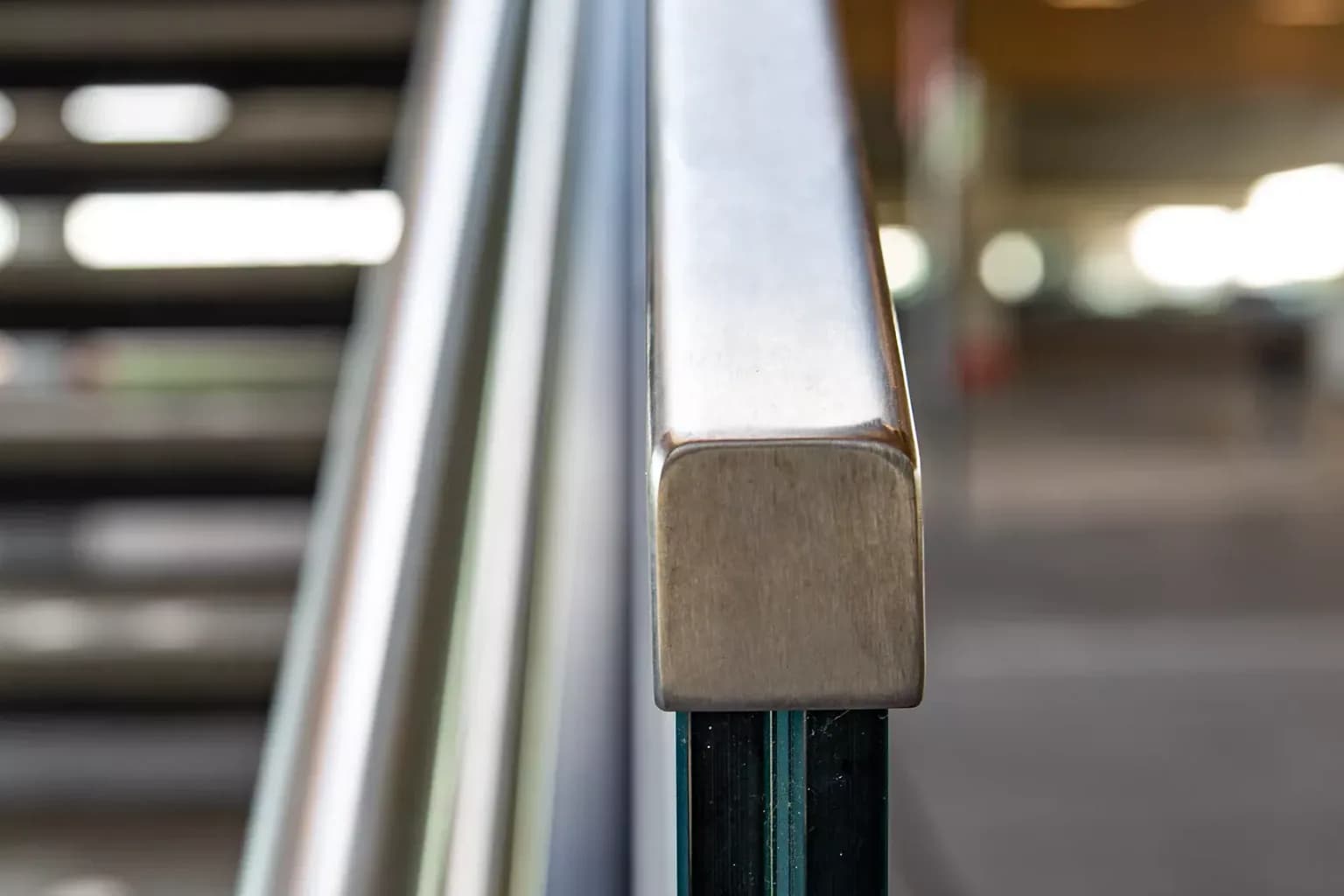
Glass and installation, once installed
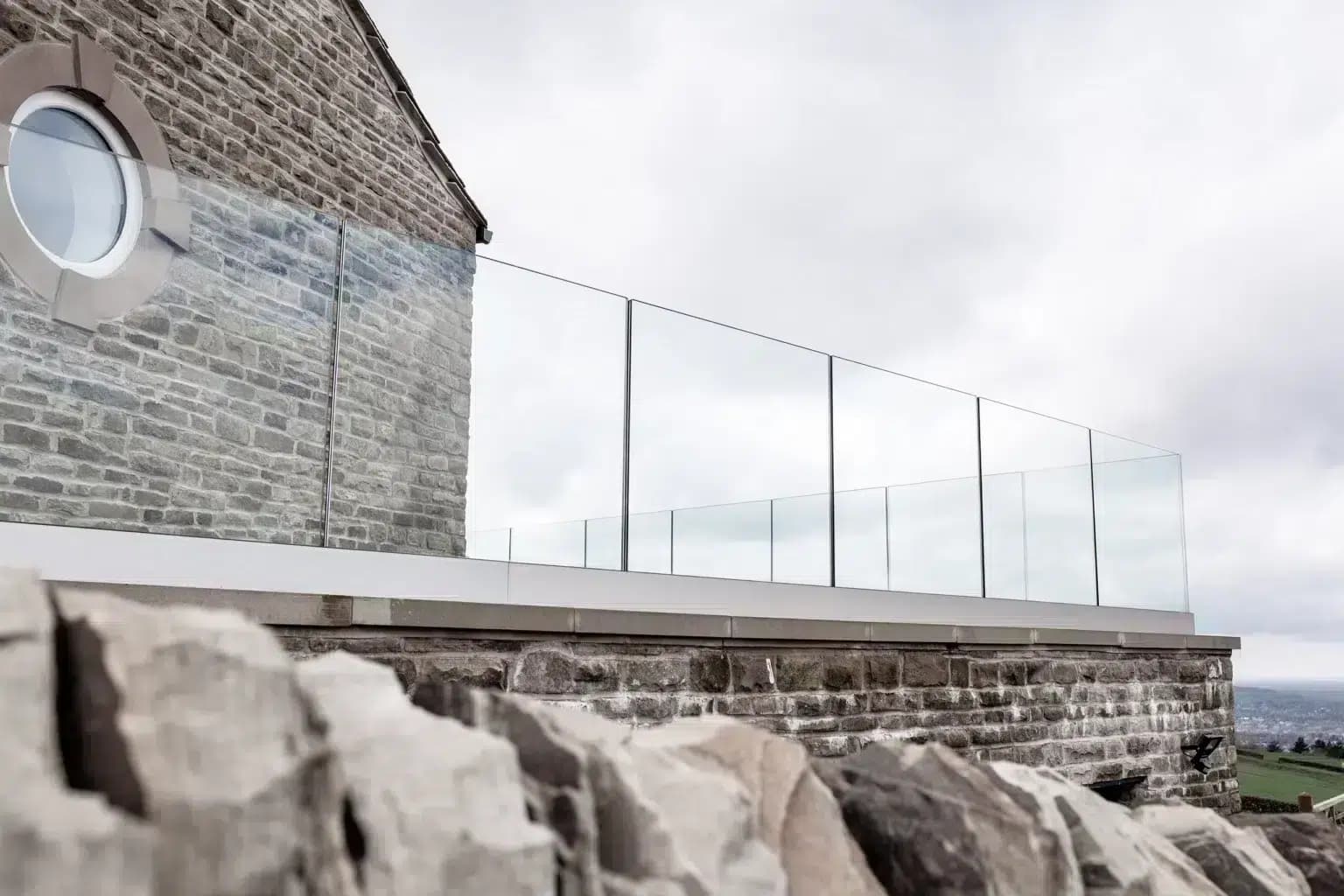
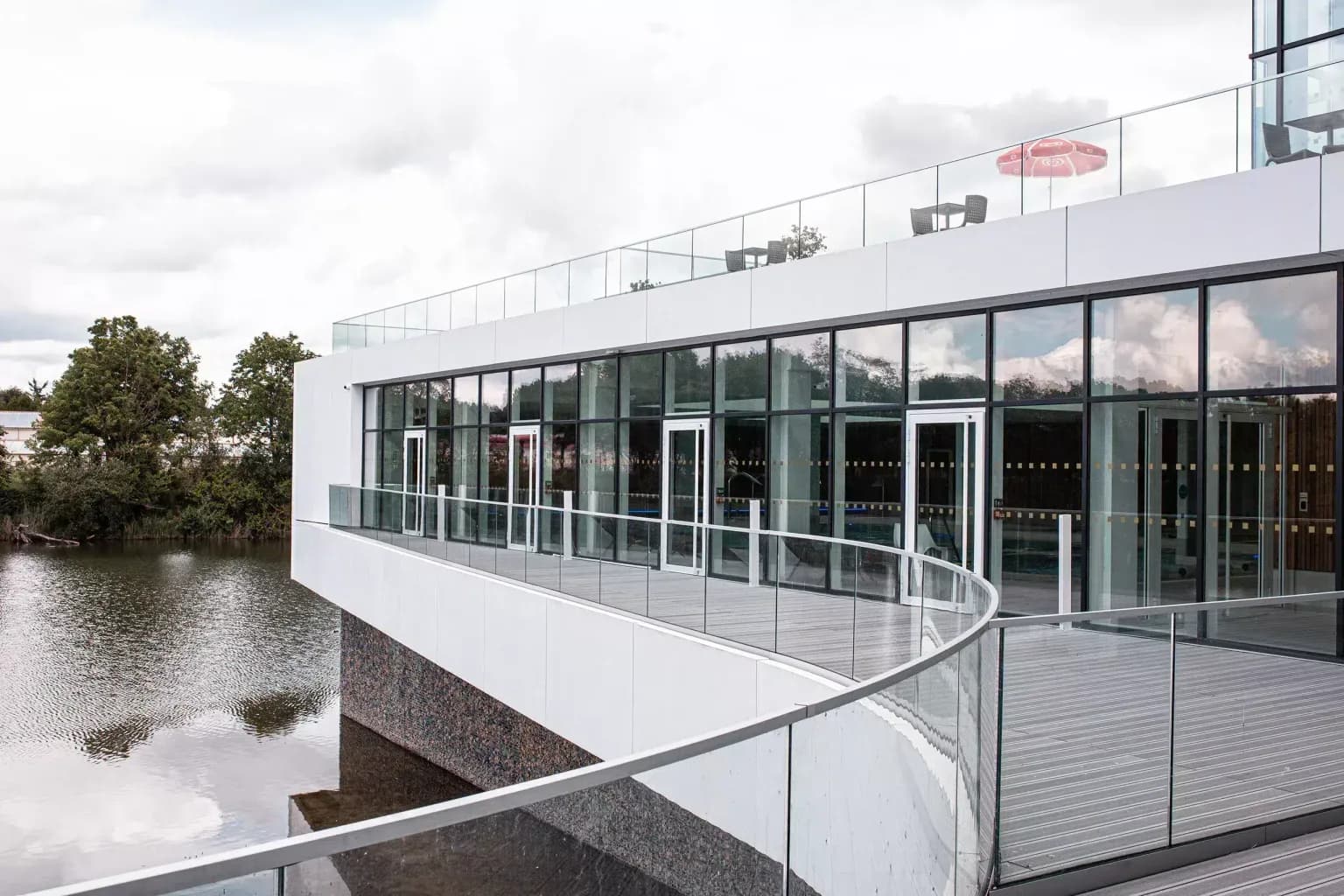
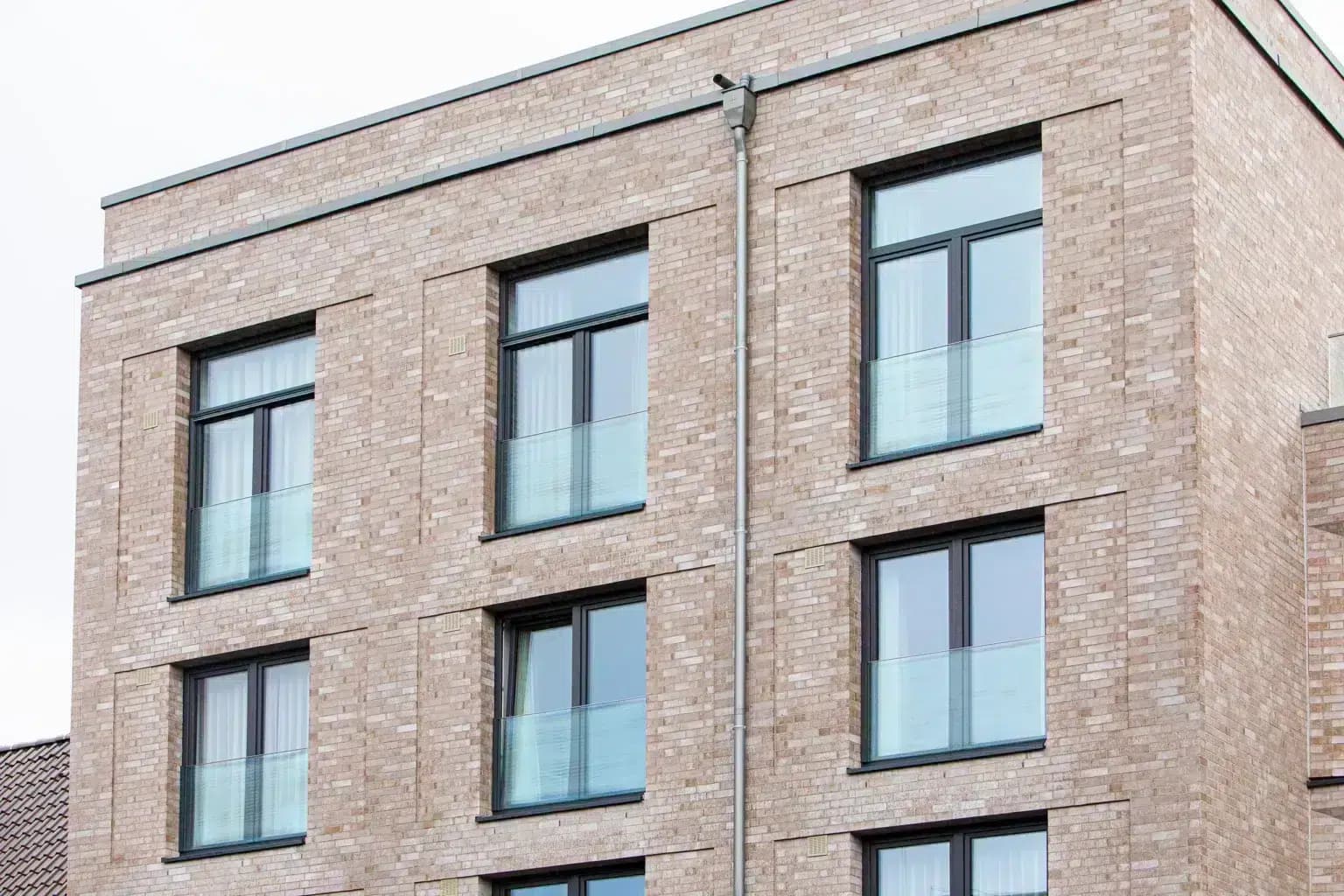
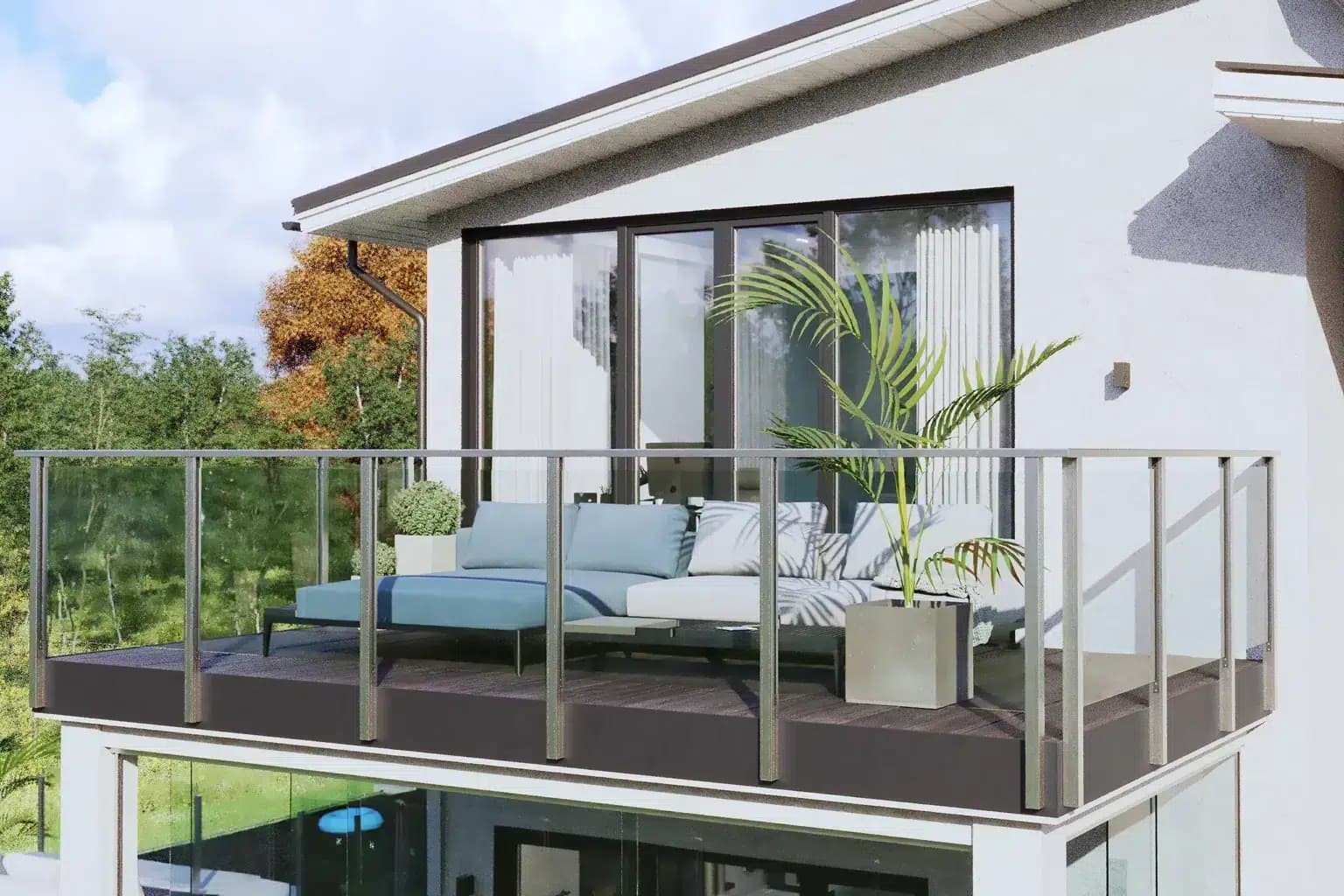
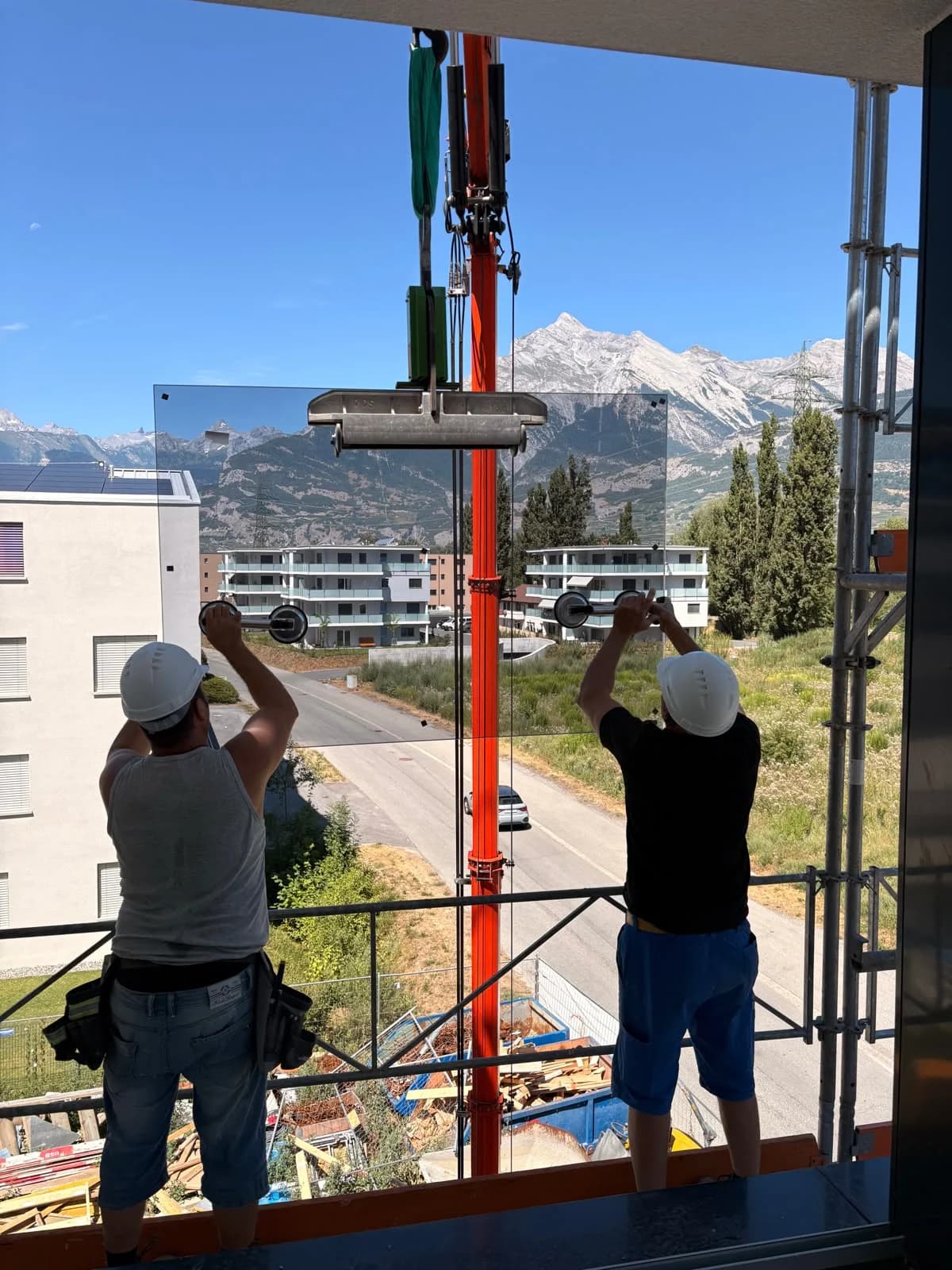
Views of systems equivalent to the ones we install. Our own projects will fill this page as they are handed over.
Frequently asked questions
About glass and installation
01How do you read a thickness such as 12.76 mm?
Two panes of 6 mm and a PVB interlayer of 0.76 mm, that is two 0.38 films. On the same principle: 10.76 mm = 2 × 5 + 0.76; 16.76 mm = 2 × 8 + 0.76; 21.52 mm = 2 × 10 + 1.52. The figure after the decimal point is always the interlayer.
02Toughened, heat-strengthened or annealed — which to choose?
Heat-strengthened in a laminated balustrade: it breaks into large pieces that stay held, so the panel keeps capacity after breakage. Toughened in a shower and monolithic, because it fragments into small non-cutting pieces. Annealed is not used in safety applications: it breaks into cutting shards.
03What is the heat soak test?
Holding toughened glass at around 290 °C for several hours, to EN 14179, which causes panes carrying a nickel sulphide inclusion to break in the factory. That is what prevents spontaneous breakage two years after installation. We require it on overhead glazing, on balustrades in public buildings, and anywhere removing a pane costs more than the pane itself.
04Which interlayer for which use?
Standard PVB by default. Stiff PVB when deflection under long-term load becomes critical. EVA in damp zones and on exposed edges, because it takes up less moisture through the edge. Ionoplast when stiffness or post-breakage capacity on one ply is required — it is the only one that allows a self-supporting balustrade at height.
05What thickness for a balustrade?
16.76 mm for cast-in structural glass, 12.76 mm mounted on a parapet, 10.76 mm with posts. These are minimums: the panel height and the wind pressure at the site can push them up. In mountain resorts, wind load is not a calculation formality.
06How tall can a panel go?
1.40 m validated by calculation in a balustrade, 2.50 m in a division. Beyond that you go back through a dedicated structural calculation, and wind resistance becomes the governing criterion, ahead of imposed load.
07Can glass be drilled or notched after the event?
No. Drillings, notches and cut-outs are done before toughening. The usual rules: a hole diameter at least equal to the glass thickness, an edge distance of at least twice the thickness, and the same distance between two holes. A hole too close to the edge is not a detail non-conformity, it is a pane to remake.
08How is a template made?
For anything that is not rectangular, we take a physical template in stiff card or thin board, full size, with the installation orientation marked on it. A dimensioned drawing does not replace a template in an older building: the corners are never 90°, and the error accumulates along the diagonal.
09What tolerances should be allowed?
On a laminate, allow in the order of ±2 to ±3 mm on the dimensions depending on size, plus a possible slight offset between the two plies. That is why clearance is kept in the channel and why glass is never drawn in direct contact with a wall: installation clearance is not carelessness, it is a design input.
10Can glass be curved?
Yes, from a radius of 1 metre, bent in the furnace over a template. The lead time is longer and the survey must be flawless: wrongly curved glass cannot be corrected, it does not fit its channel. The template is taken after casting, never from the construction drawing.
11Which tint gives privacy without losing light?
Laminate with an opal interlayer: milky white, high light transmission, no through-view. Acid etching does the same with a cooler rendering. Bronze and grey, by contrast, genuinely darken the room behind — useful on a south façade, to be avoided on a north one.
12What does made-to-measure glass cost?
The order of magnitude runs from 150 to 700 CHF per square metre depending on build-up, heat treatment, tint and edgework, with a minimum charge per piece. Curved glass, ionoplast and non-standard cut-outs fall outside that range. The final figure comes after survey — and the glass is ordered once the dimensions have been countersigned.
The systems we install are certified
 SIA 261Loads — Swiss standard
 CEEuropean conformity
 BS 6180Balustrades — building
 AbP LGAApproved German testing
 CCFATFrench technical approval
 KOMOSKG-IKOB certification
 RPF 14VEROTEC test laboratory
Next step
Configure your model, or take the dimensions with you
LuxeGlass Studio prices dimensions, finish and fixing. The catalogue carries every dimension in the range — worth keeping to hand on site.
Would you rather we handled it? Request a quote — site survey, supply and installation included.
- Installation
- By our own teams, anywhere in Switzerland
- Glass
- Laminated, toughened, tinted or acid-etched
- Quote lead time
- Priced within 24 hours, installation included