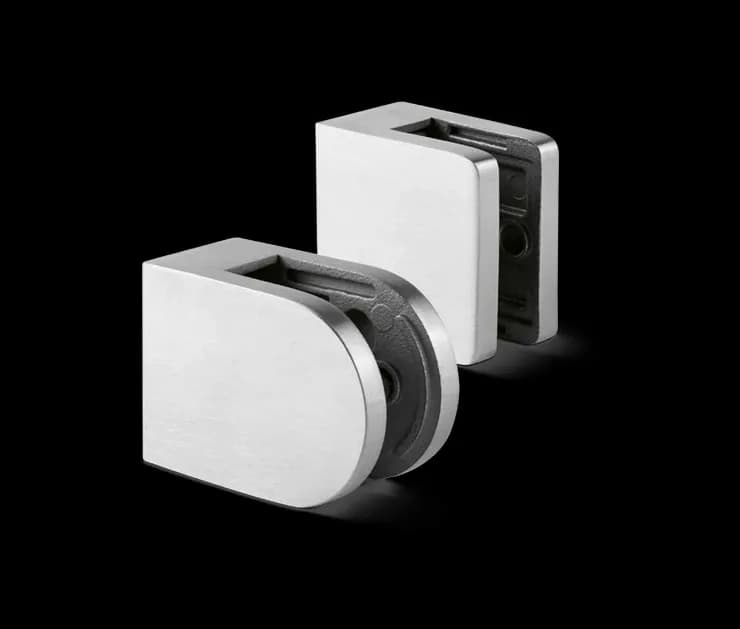
 PV-10
PV-10Adjustable clamp, square body, flat back
- Application
- Private and commercial
- Glass
- 8 mm trempé – 12,76 mm feuilleté
- Lengths
- À l'unité
316 stainless clamps and spigots, drilled to the half-millimetre. The hardware becomes a detail.
Made to measure — priced after survey
The product
No continuous channel: the glass holds on a few points, and every one of them gets looked at.
The glass clamp is the opposite of the continuous channel. The glass is held at a few points, the structure stays visible, and anything not perfectly aligned jumps out. It is a system that forgives less during installation than a channel, but that can be used where the slab cannot be opened up: stairs, landings, refurbishments, timber floors.
Three families answer three situations. The post clamp — flat-backed, or cradled for Ø 42.4 and Ø 48.3 mm tube — serves flights and long runs. The floor spigot, a cast base 147 mm high, takes the load directly into the slab and gives the most minimal appearance on a terrace. The through-bolted point fixing, for its part, hangs the glass from a load-bearing wall or a façade.
The range of thicknesses governs everything else. A standard clamp takes from 8 mm toughened to 12.76 mm laminated, with adjustment by sets of packers. A floor spigot runs from 10 to 21.52 mm and is tested at 0.74 kN or 1.5 kN depending on the thickness put into it. Below and above those ranges, it is no longer the same product.
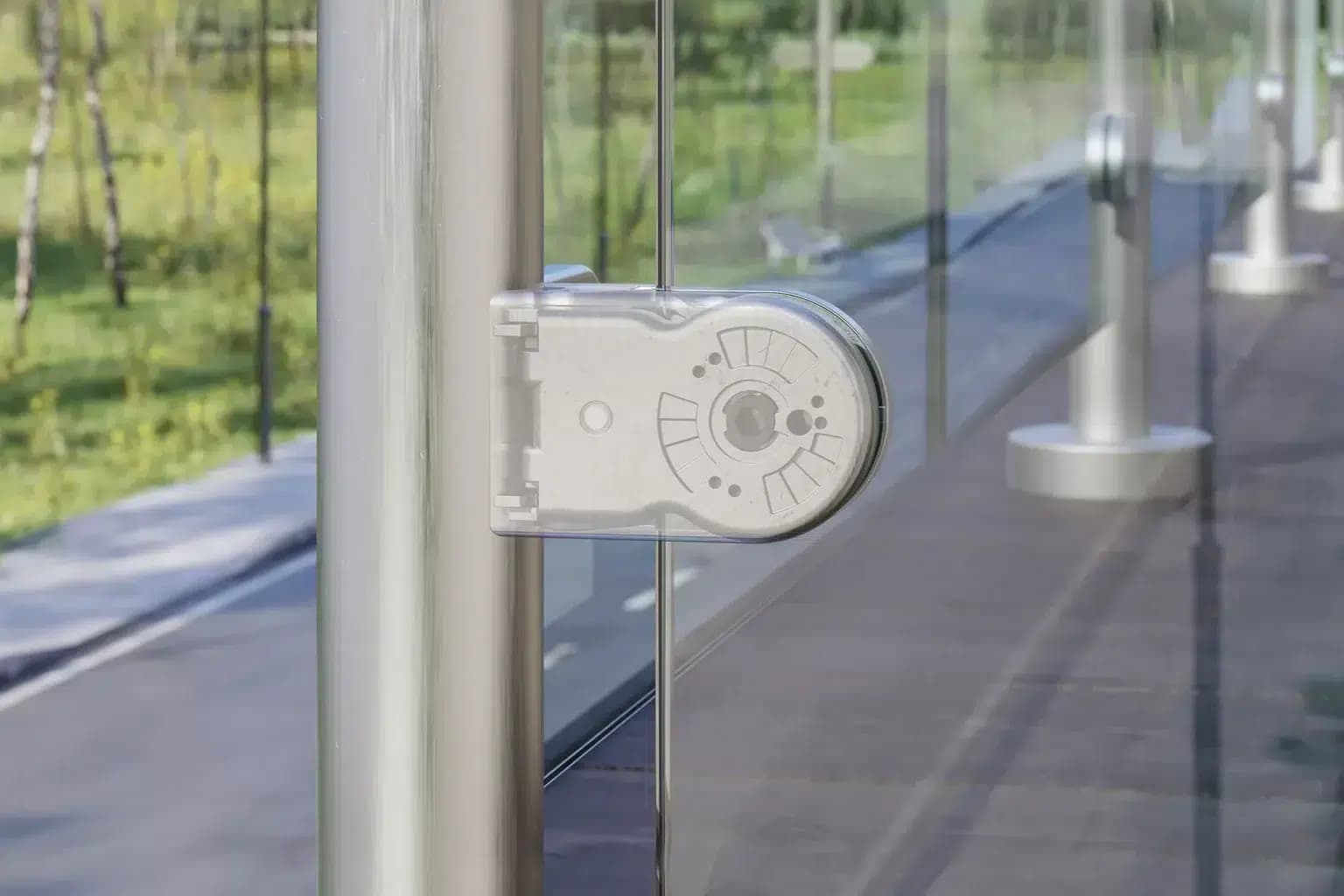
The sensitive point is the glass-to-metal contact. Direct clamping breaks the glass at the first differential expansion: it needs the rubber inserts on both faces, the specified torque, and the safety pin that stops the panel sliding if the clamping slackens. That is also what we come back to check after a year, when nobody else is thinking about it.
The range
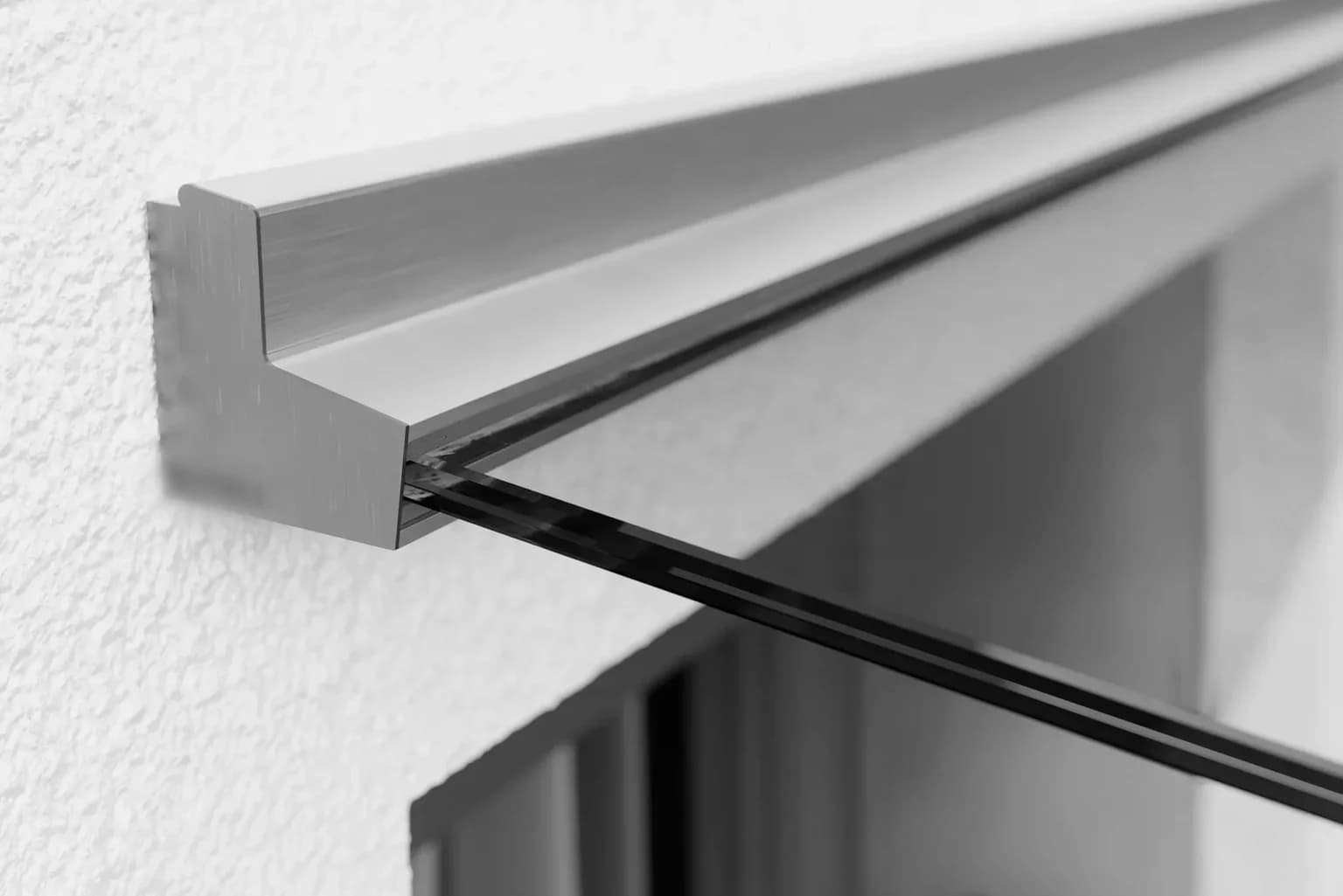
Each section drawing is that of the system as actually installed. The dimensions beside it are the values the system is approved for, not ballpark figures.
PV-10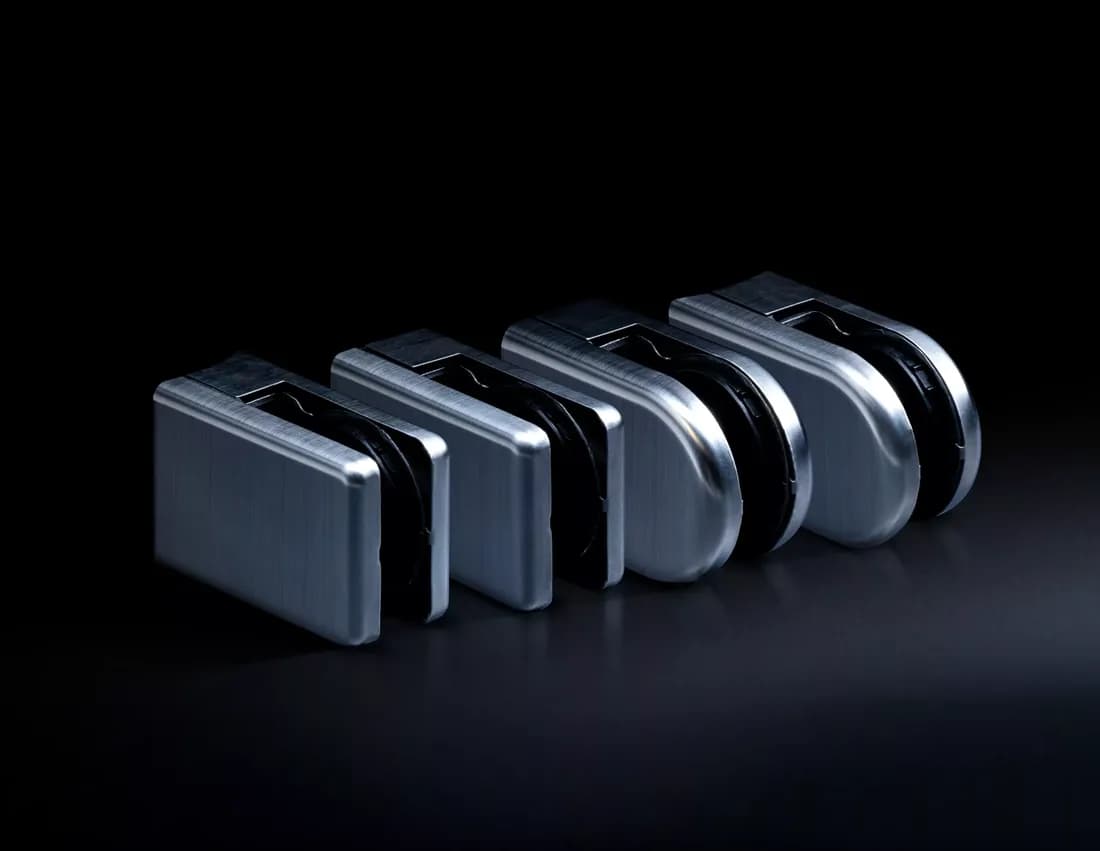 PV-20
PV-20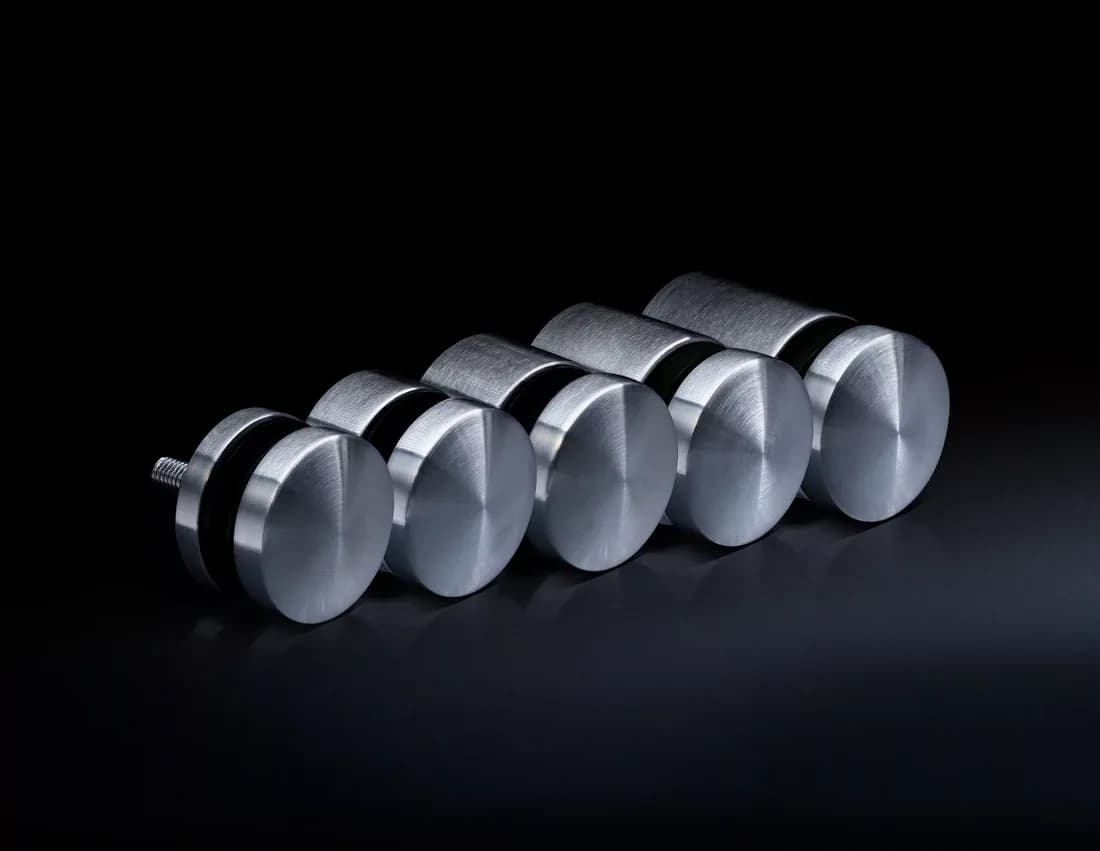 PV-30
PV-30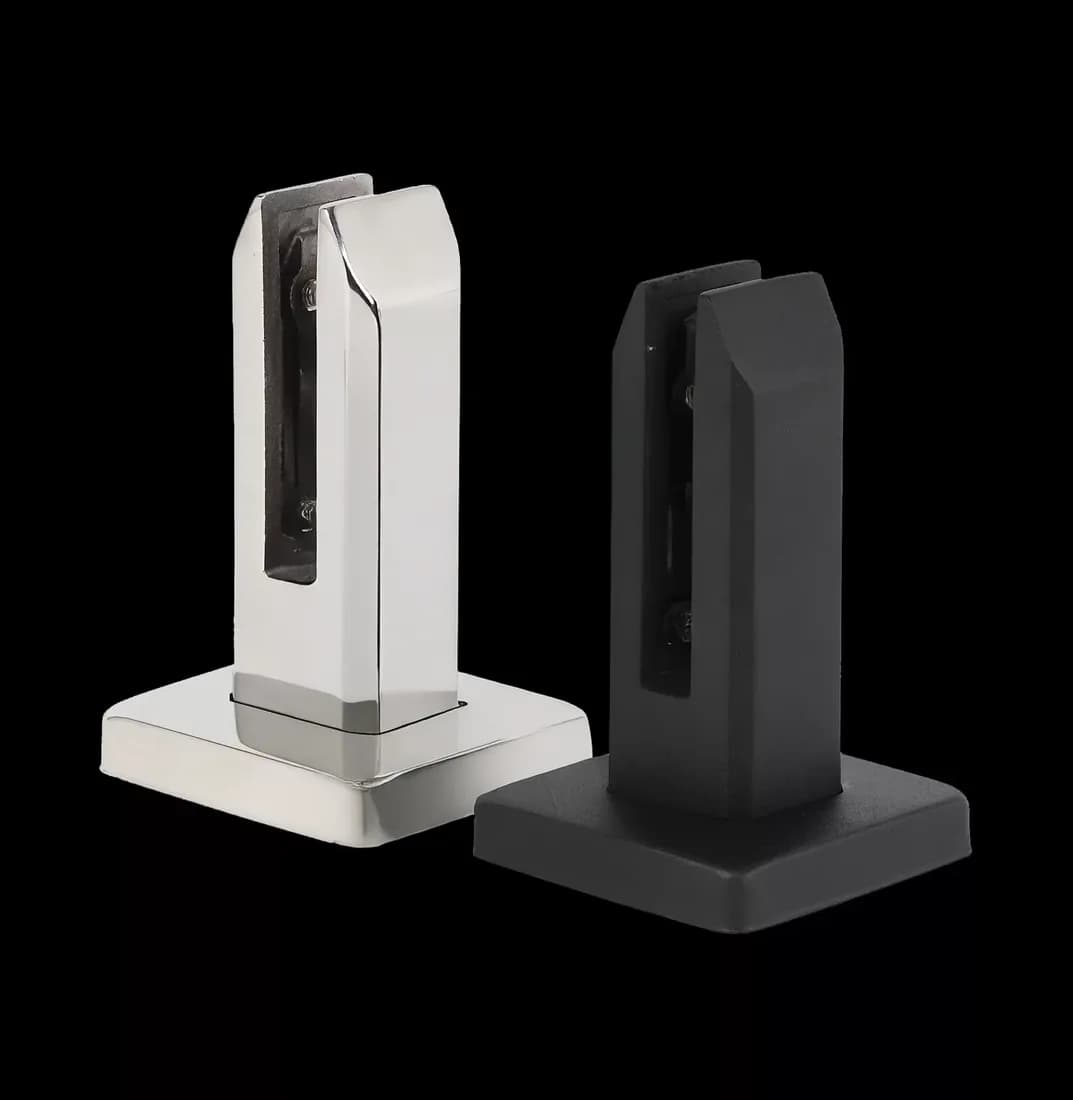 PV-40
PV-40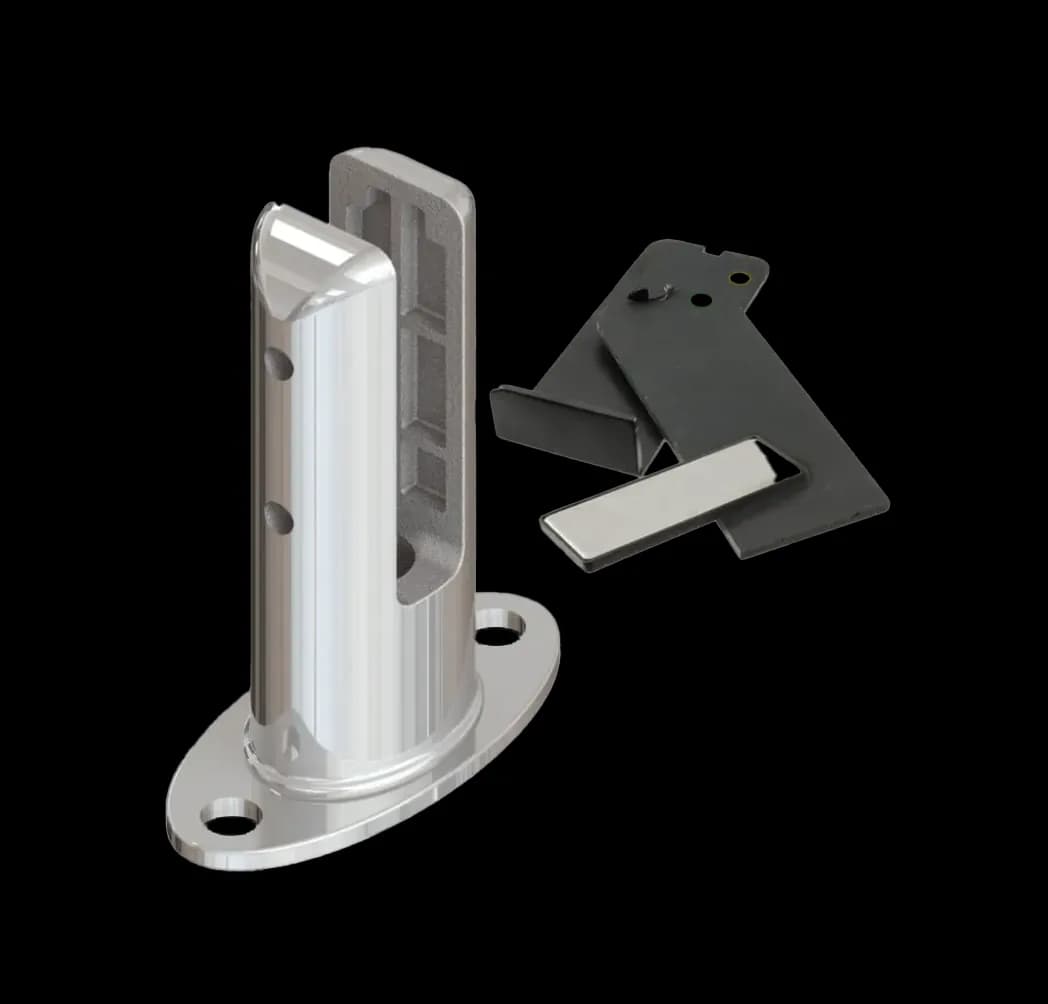 PV-50
PV-50Compare
The «lengths» column has no object here: these parts are counted individually, and what is calculated is how many per metre, not how long. The number of points and their spacing are sized on the load of the category of the space, the panel width and the glass thickness — we attach the calculation to the quote.
| Model | Application | Glass thickness | Approved load | Fixing centres | Lengths | Mill finish | Anodised | Curvable |
|---|---|---|---|---|---|---|---|---|
| PV-10Adjustable clamp, square body, flat back | Private and commercial | 8 mm trempé – 12,76 mm feuilleté | — | — | À l'unité | |||
| PV-20Adjustable clamp, round body, cradle Ø 42.4 / 48.3 mm | Private and commercial | 8 mm trempé – 12,76 mm feuilleté | — | — | À l'unité | |||
| PV-30Certified stainless clamp, D shape 63 × 45 mm | Private, commercial and public | 8 – 12,76 mm | — | — | À l'unité | |||
| PV-40Floor spigot, oval body | Private, commercial and public | 10 – 21,52 mm | 0,74 kN et 1,5 kN selon l'épaisseur | — | Hauteur 147 mm | |||
| PV-50Illuminated floor spigot | Private and commercial | 12 · 13,52 · 15 mm | — | — | À l'unité |
The loads shown are those the system is approved for. Final sizing depends on the use of the space and the wind pressure at the site — that is what we check during the survey.
Downloads
A4 data sheets, one per profile: vertical section, dimensions, finishes. Final dimensions are set at the site survey.
Non-contractual documents · Current edition
Downloads
Mounting instructions, brochures, technical data sheets and certifications for the systems we install, in their original version.
| Document | Country | Language | |
|---|---|---|---|
| Static Calculation Point Fixings | 50mm | BS6180:2011 | UK | EN | 8.8 MB |
| Static Calculation Point Fixings | 60mm | BS6180:2011 | UK | EN | 12.9 MB |
| Statische berekening 2160 - 0.8kN - glaspaneel 1200*1250 mm | Benelux | NL | 943 KB |
| Statische berekening 2160 - 0.8kN - glaspaneel 1200*1450 mm | Benelux | NL | 846 KB |
| Statische berekening 2160 - 0.5kN | Benelux | NL | 774 KB |
| Statische berekening 2160 - 0.3kN | Benelux | NL | 925 KB |
| Statische berekening 2160 general | Benelux | NL | 4.9 MB |
| Loading test | Titan Spigot | according: BS 6180:2011 | UK | EN | 1.1 MB |
One PDF drawing per article number, served by the manufacturer.
Finish
Stainless steel is not a material, it is a family. V2A (304) goes indoors and in ordinary atmospheres. V4A (316) starts where there is chlorine, de-icing salt or the damp air of a lake. The floor spigots are cast in duplex 2205, an austenitic-ferritic stainless markedly more resistant to stress corrosion cracking — exactly what attacks a spigot base set into a pool deck.
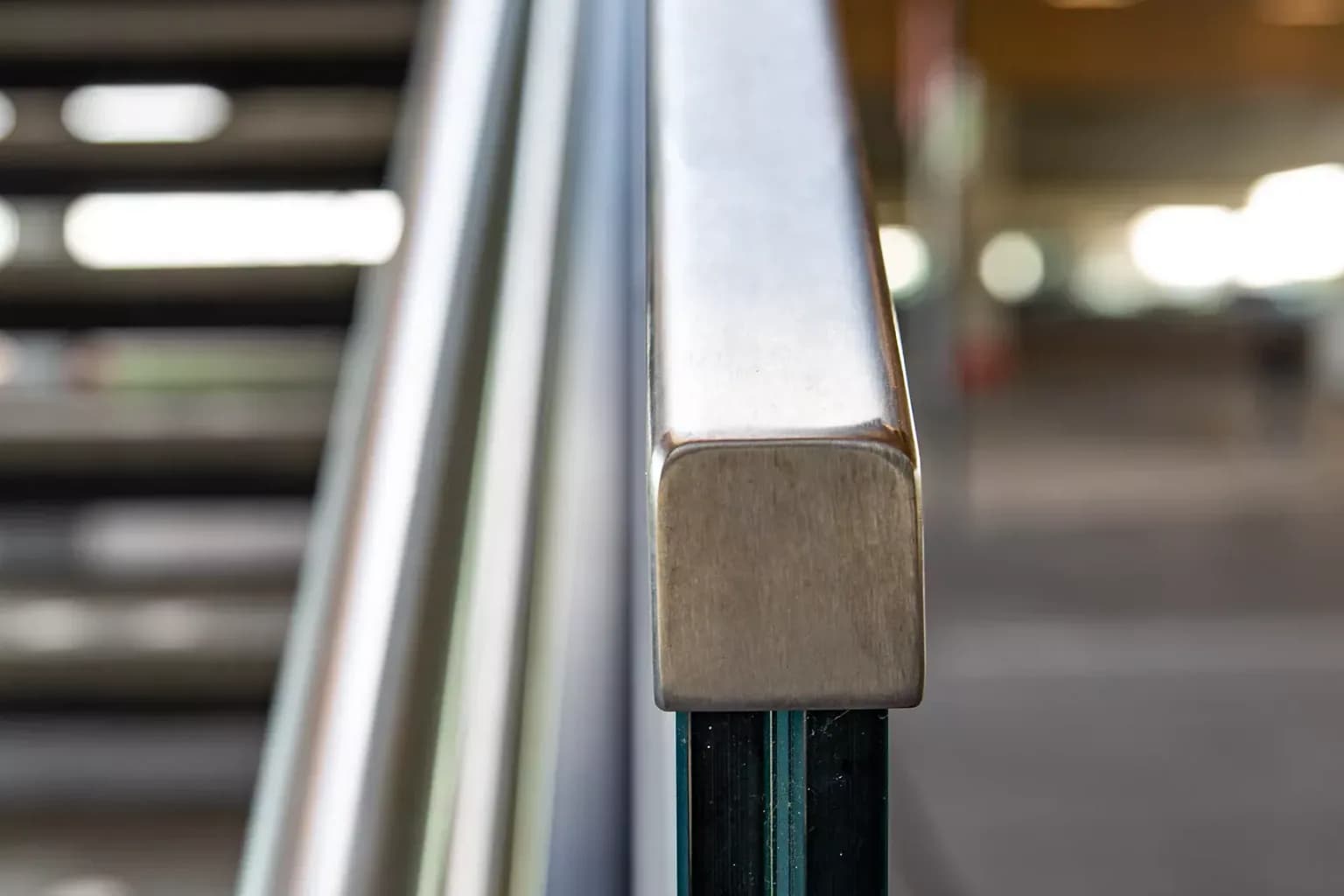
On appearance, brushed 240 grit is the most liveable in use; the mirror polish is splendid and shows everything. Matt black powder coating has become the standard for contemporary terraces and is available across the RAL palette, but a coating on stainless steel scratches more easily than anodising on aluminium. On a clamp you brush past, that is worth knowing before choosing.


The drawing
Every piece starts from a workshop drawing dimensioned to the half-millimetre. That is what guarantees a true line once on site.
Installed
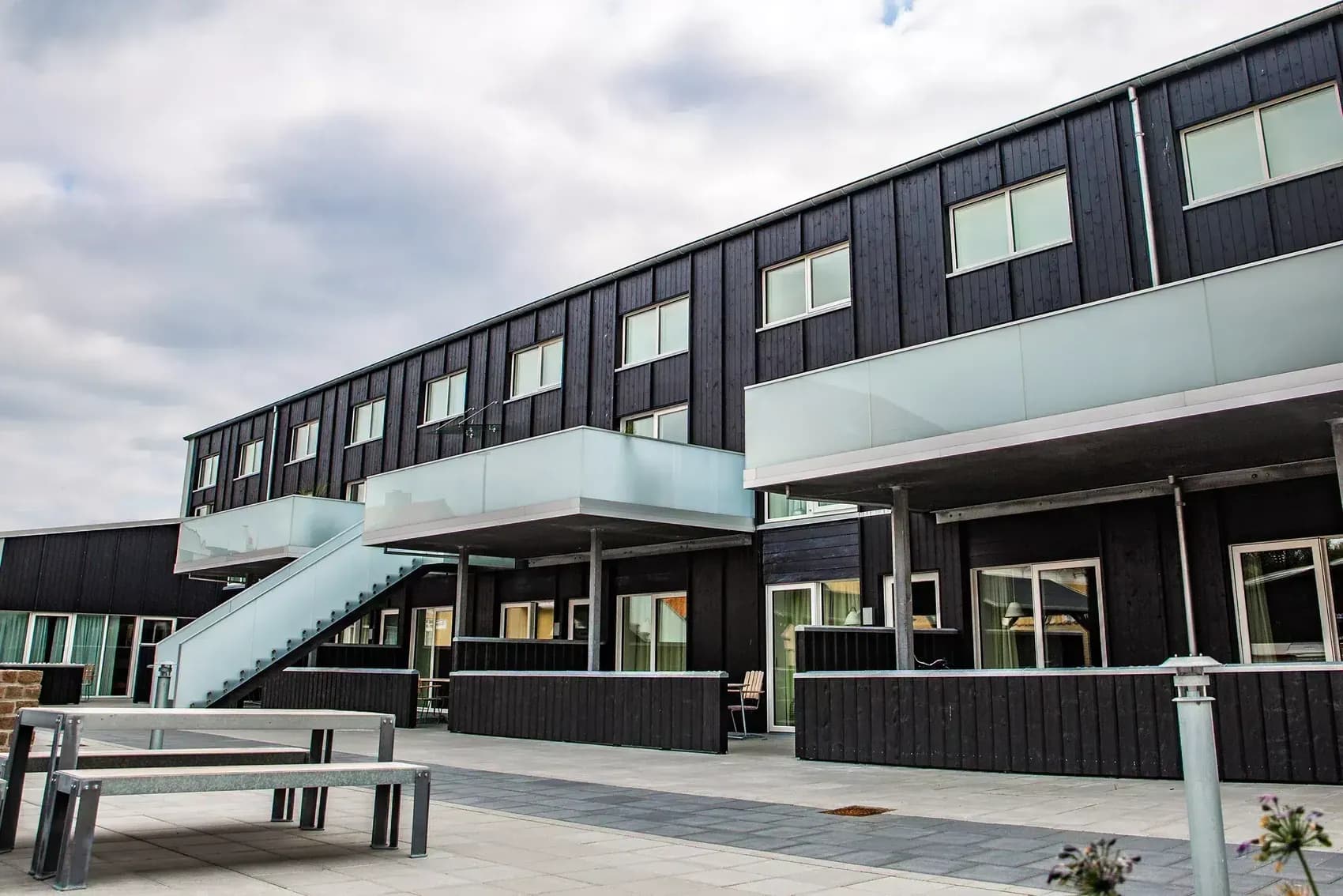
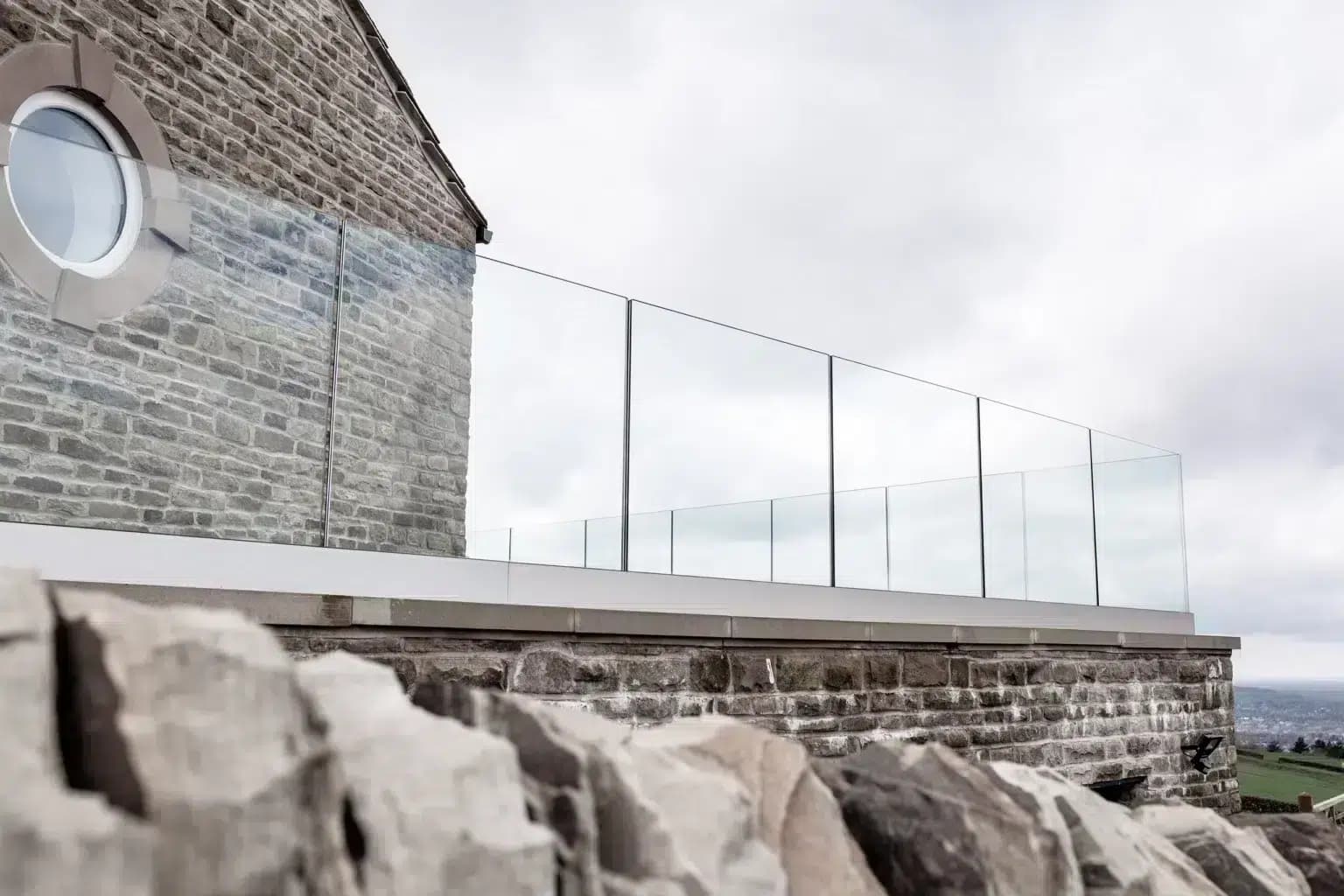
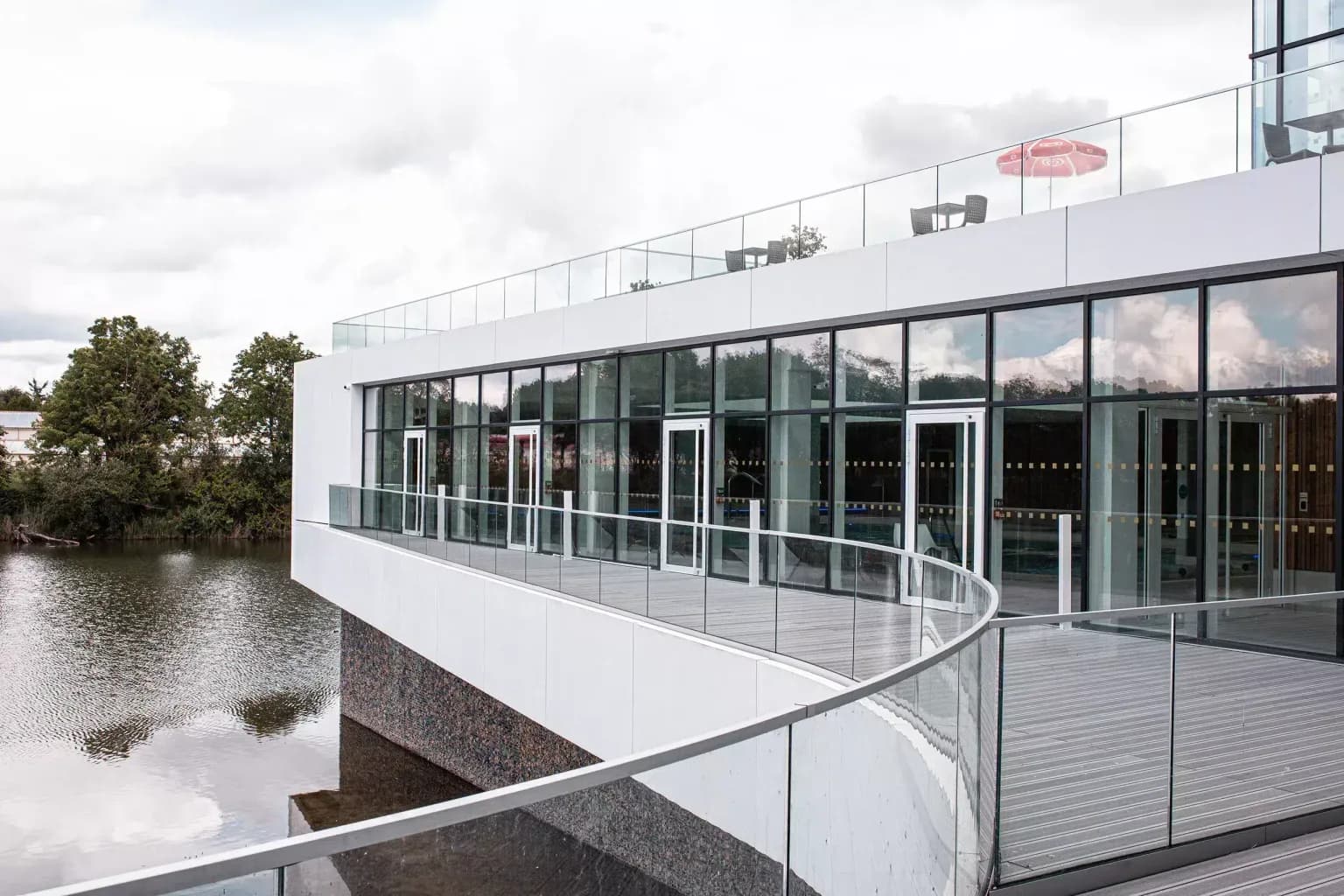
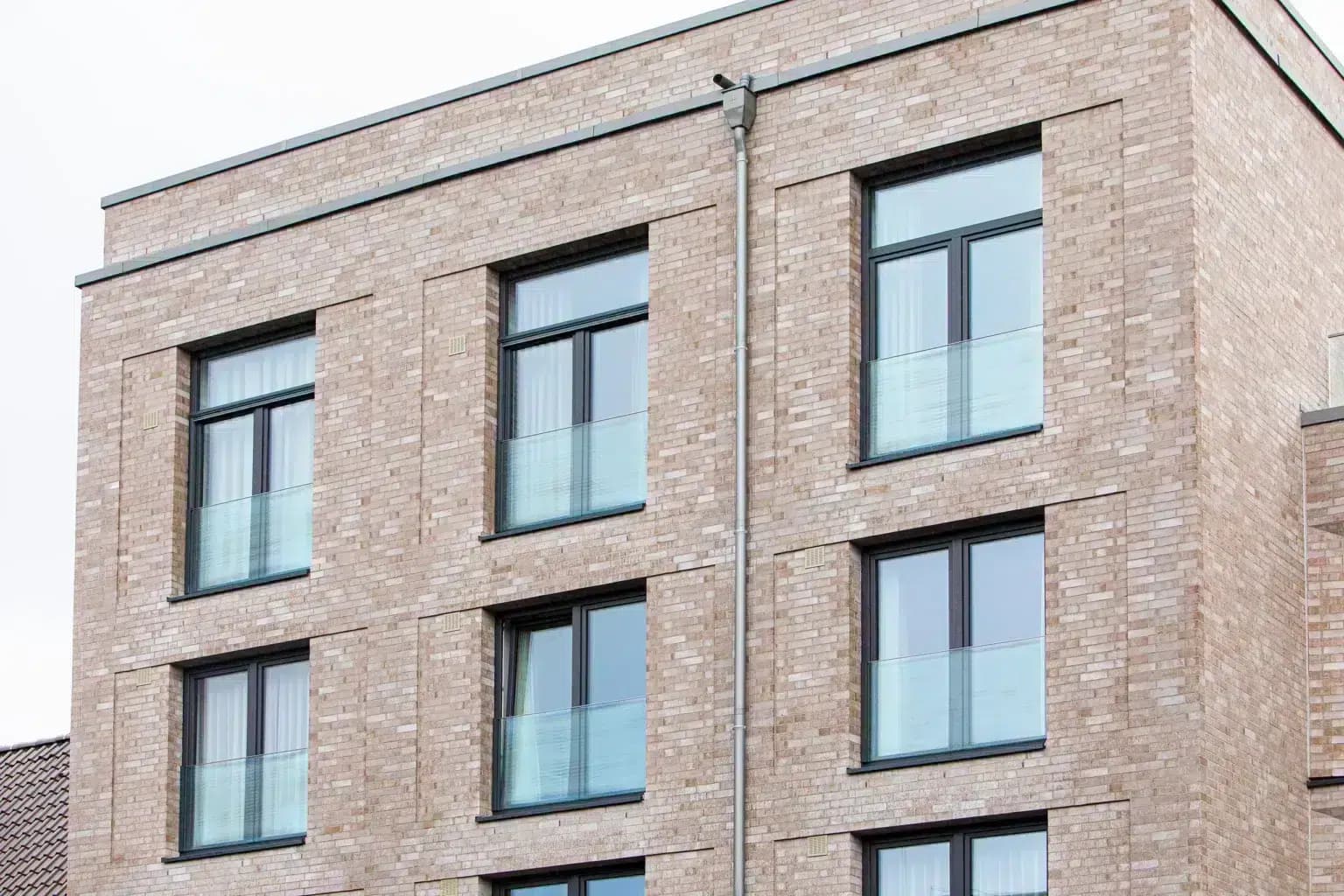
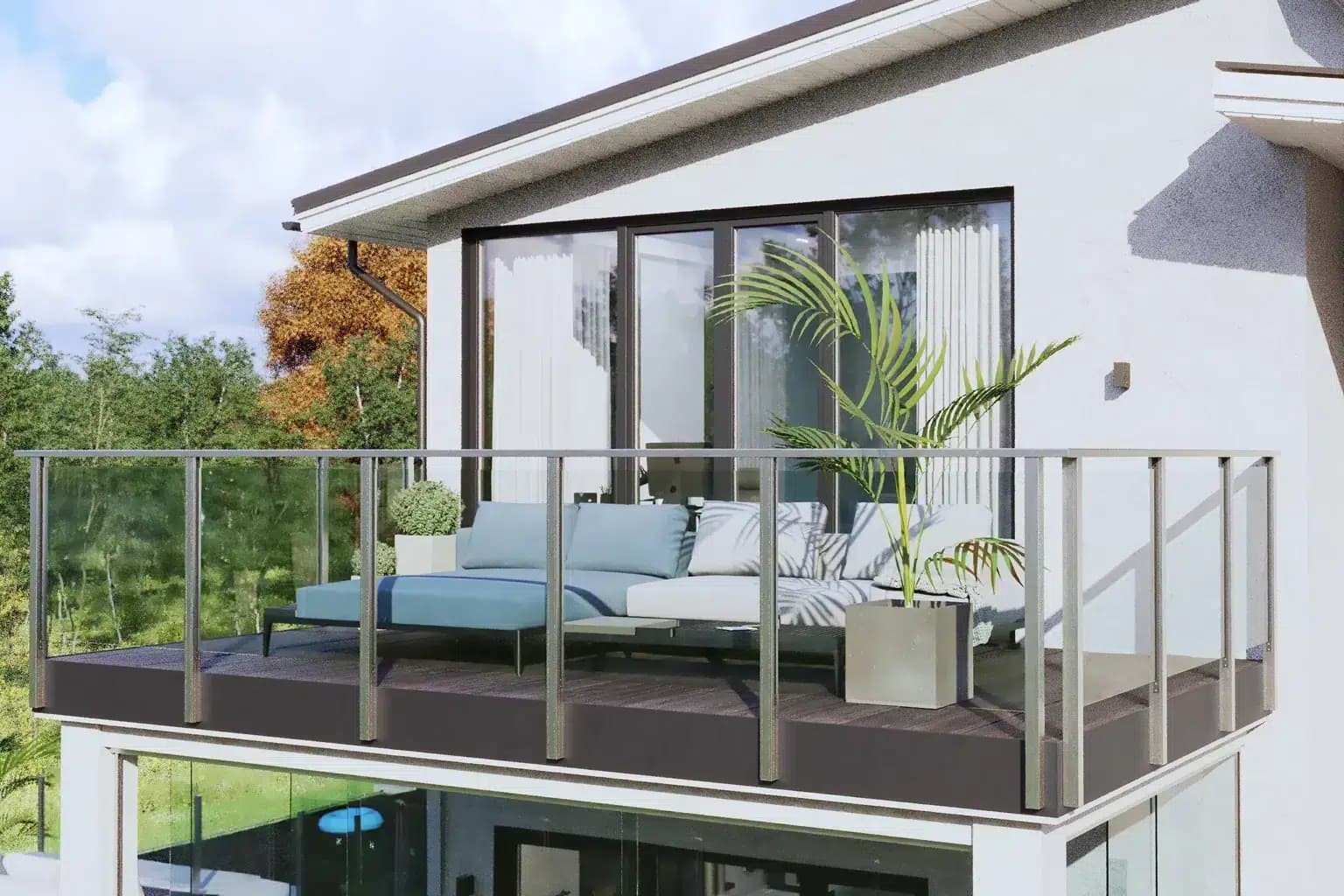
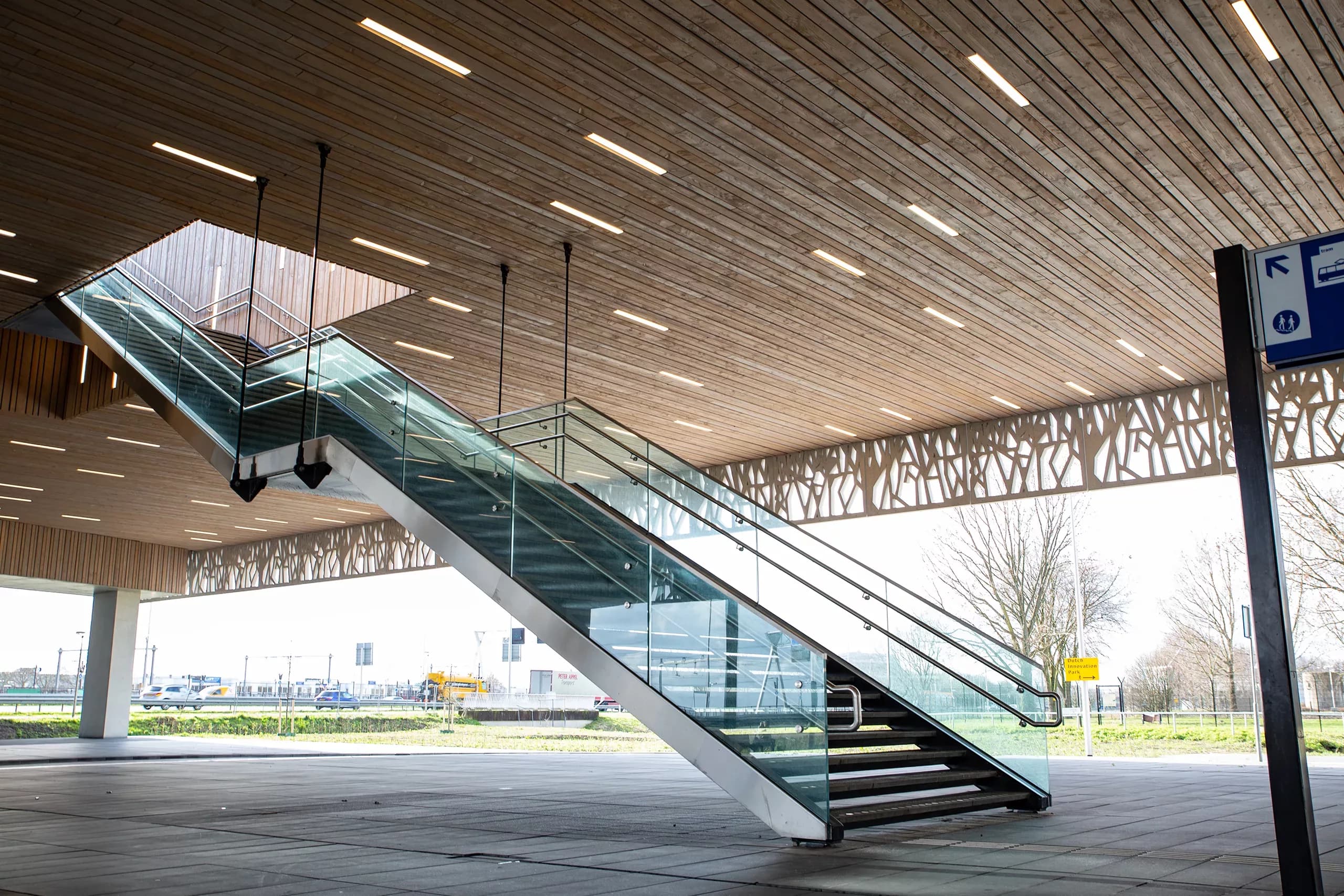
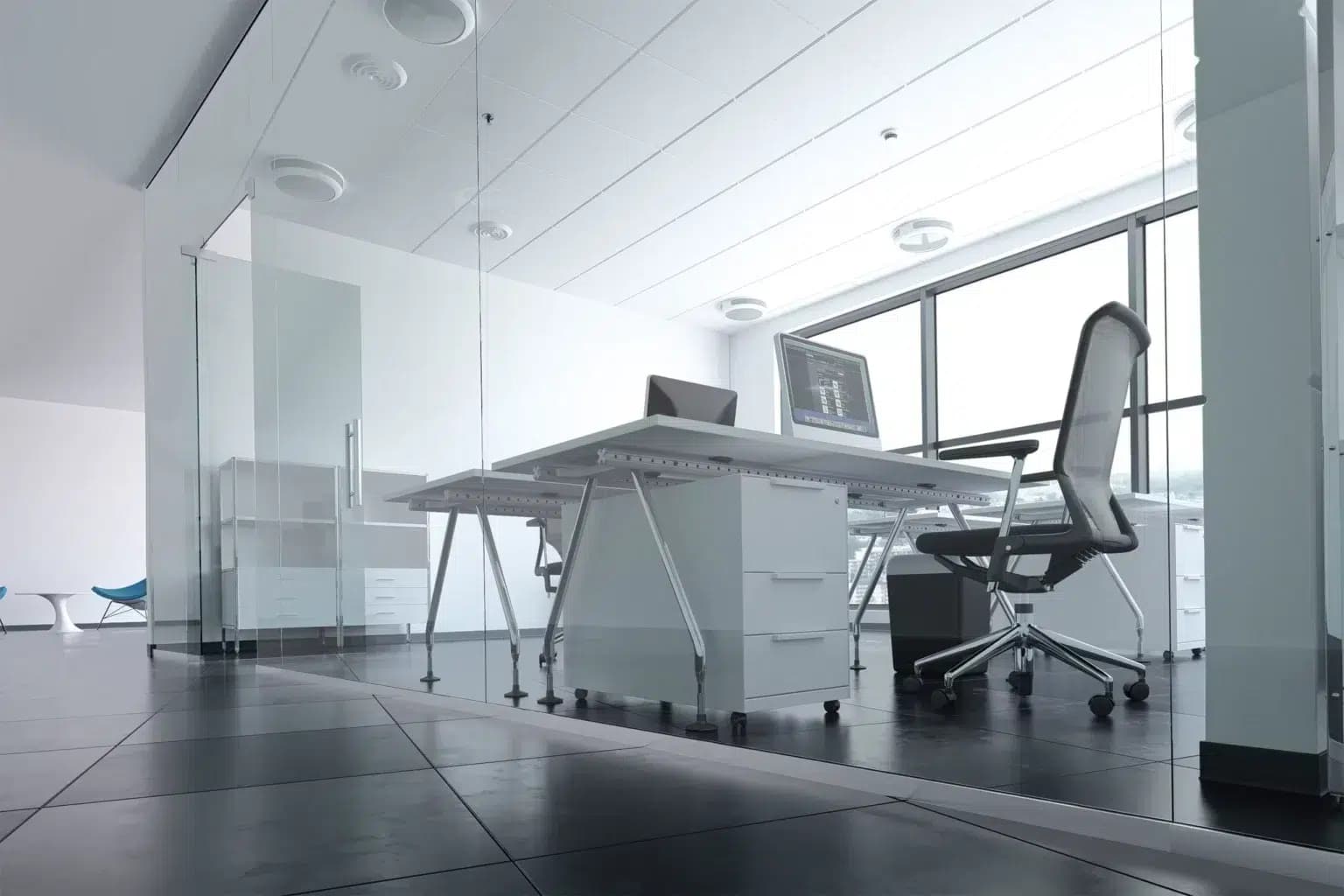
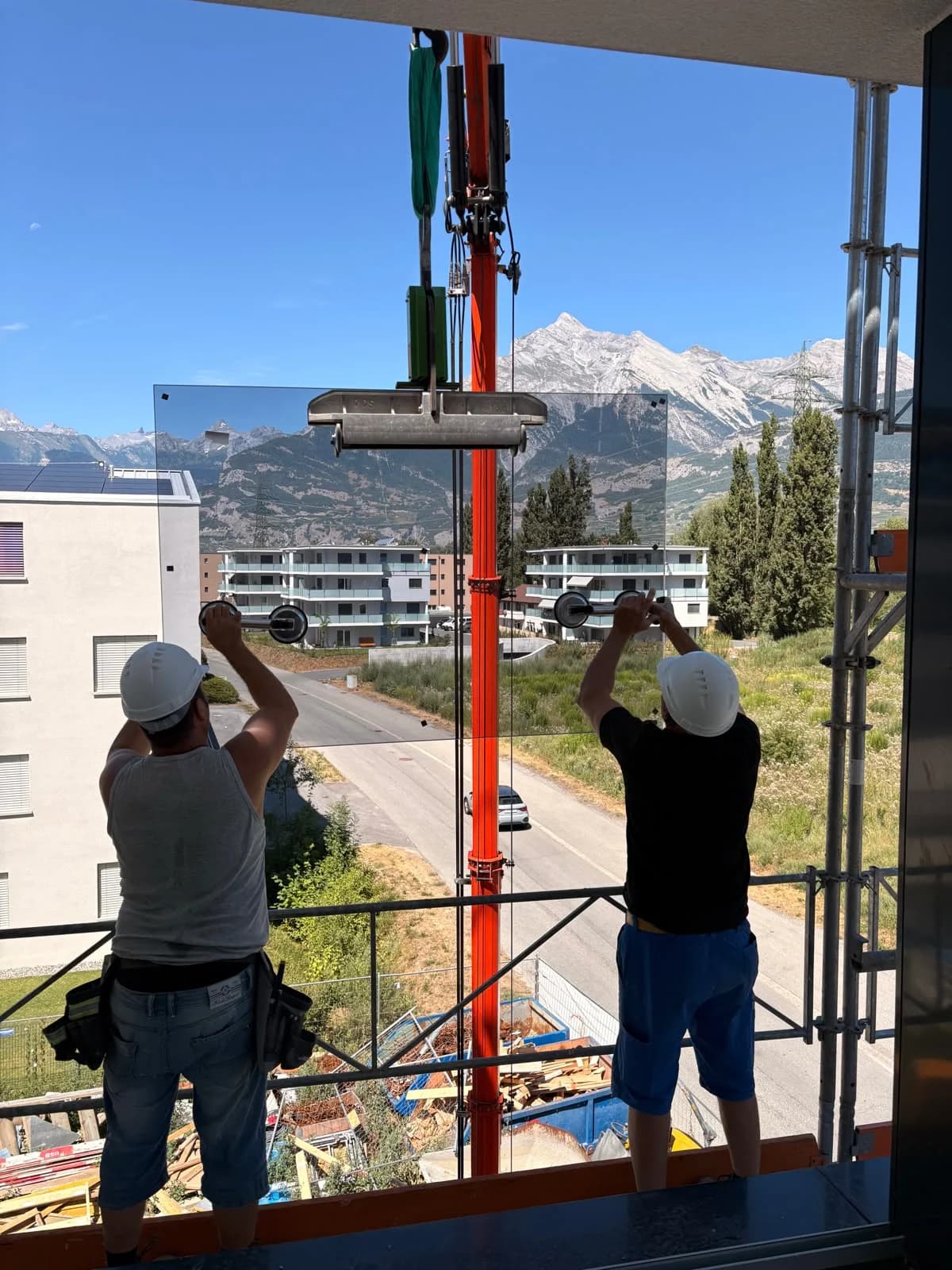
Views of systems equivalent to the ones we install. Our own projects will fill this page as they are handed over.
Frequently asked questions
Four per panel is the usual rule on a balustrade, two on simple infill. The final number comes out of the calculation: it depends on the load of the category of the space, the panel width and the glass thickness. That calculation is attached to the quote; it is not read off a catalogue.
8 mm toughened to 12.76 mm laminated on standard clamps. 10 to 21.52 mm on floor spigots. 12, 13.52 or 15 mm on illuminated spigots, whose groove is dedicated. Going outside those ranges means changing product, not adding a packer.
In a balustrade, laminated is mandatory: it is the interlayer that holds the fragments and the panel in the event of breakage. Monolithic toughened glass is reserved for infill with no risk of falling — a spandrel, a division, a privacy screen.
No for a clamp, which grips the glass by its faces. Yes for a through-bolted point fixing — and in that case the drilling is done before toughening. Toughened glass can no longer be drilled, it shatters: a wrong survey is paid for in new glass, not in reworking.
Cradle Ø 42.4 mm or Ø 48.3 mm, or flat back for mounting on a plate, on a stringer or on a concrete upstand. The cradle has to match the tube: a Ø 42.4 clamp on a Ø 48.3 tube cannot be made good by tightening — it marks and it slips.
0.74 kN or 1.5 kN depending on the glass thickness, as tested. The weak link is almost never the spigot but its anchorage: embedment depth, concrete quality and cover are checked before ordering. On a doubtful substrate, we carry out a pull-out test.
Not on a floating screed and not on bonded tiling: you have to reach the structure. On timber it is possible with a plate and reinforcement beneath the floor. That is decided at survey, while you can still open up — afterwards it is a floor rebuild.
By sets of packers, playing on their thickness. The rubber inserts are not adjustment packers: crushing them to take up three millimetres is preparing a breakage at the first temperature swing.
No on the models with a sliding sleeve, where the clamping is concealed once the sleeve is slid over. On the others, a cover plate clips on. In every case, installation is carried out from the safe side — never from the void side, which also avoids scaffolding on a balcony.
Soapy water and a soft cloth, twice a year, three times in a salty zone or by a lake. Never wire wool or chlorine-based products on stainless steel: the iron particles left on the surface rust and produce pitting that has nothing to do with the quality of the grade. A check of the clamping after a year forms part of the handover.
The part itself runs in the order of 40 to 250 CHF depending on model and grade. But what makes the price of a clamp balustrade is the number of points and the alignment time, not the catalogue line. Installation is quoted after survey.
The systems we install are certified, backed by load testing, including clamps under a certificate of fitness for use. We attach the test reports for the chosen system to the quote.
The systems we install are certified
 SIA 261Loads — Swiss standard
 CEEuropean conformity
 BS 6180Balustrades — building
 AbP LGAApproved German testing
 CCFATFrench technical approval
 KOMOSKG-IKOB certification
 RPF 14VEROTEC test laboratory
Next step
This category is measured on site. The catalogue carries every dimension in the range — worth keeping to hand on site.
Made to measure — priced after survey
Would you rather we handled it? Request a quote — site survey, supply and installation included.