 ML-10
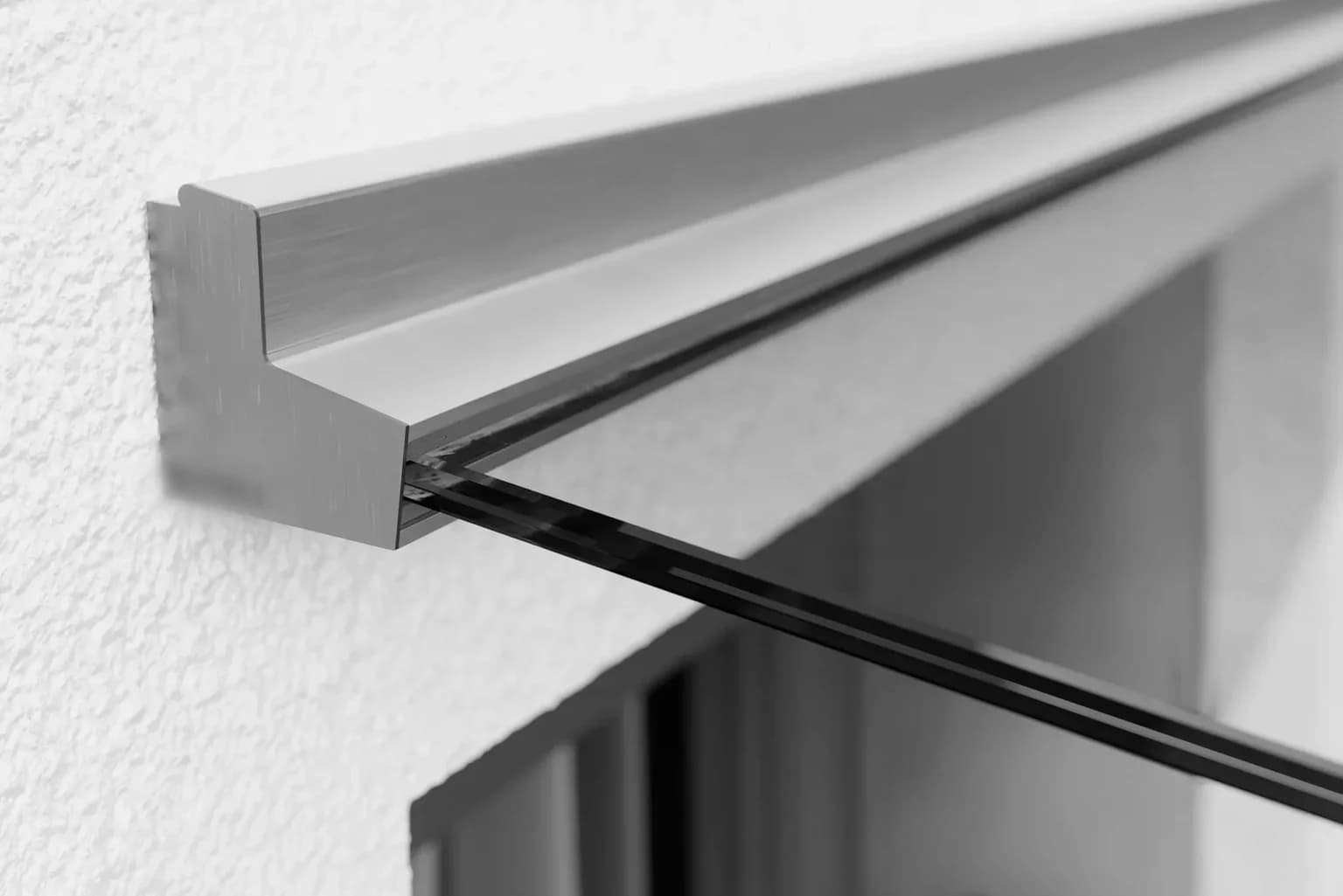
ML-10Wall-mounted LED handrail, aluminium
- Application
- Private, commercial and public
- Glass
- Sans objet — pose murale
- Centres
- 2 supports par 2,5 m · 4 par 5 m
- Lengths
- 2,5 m · 5 m
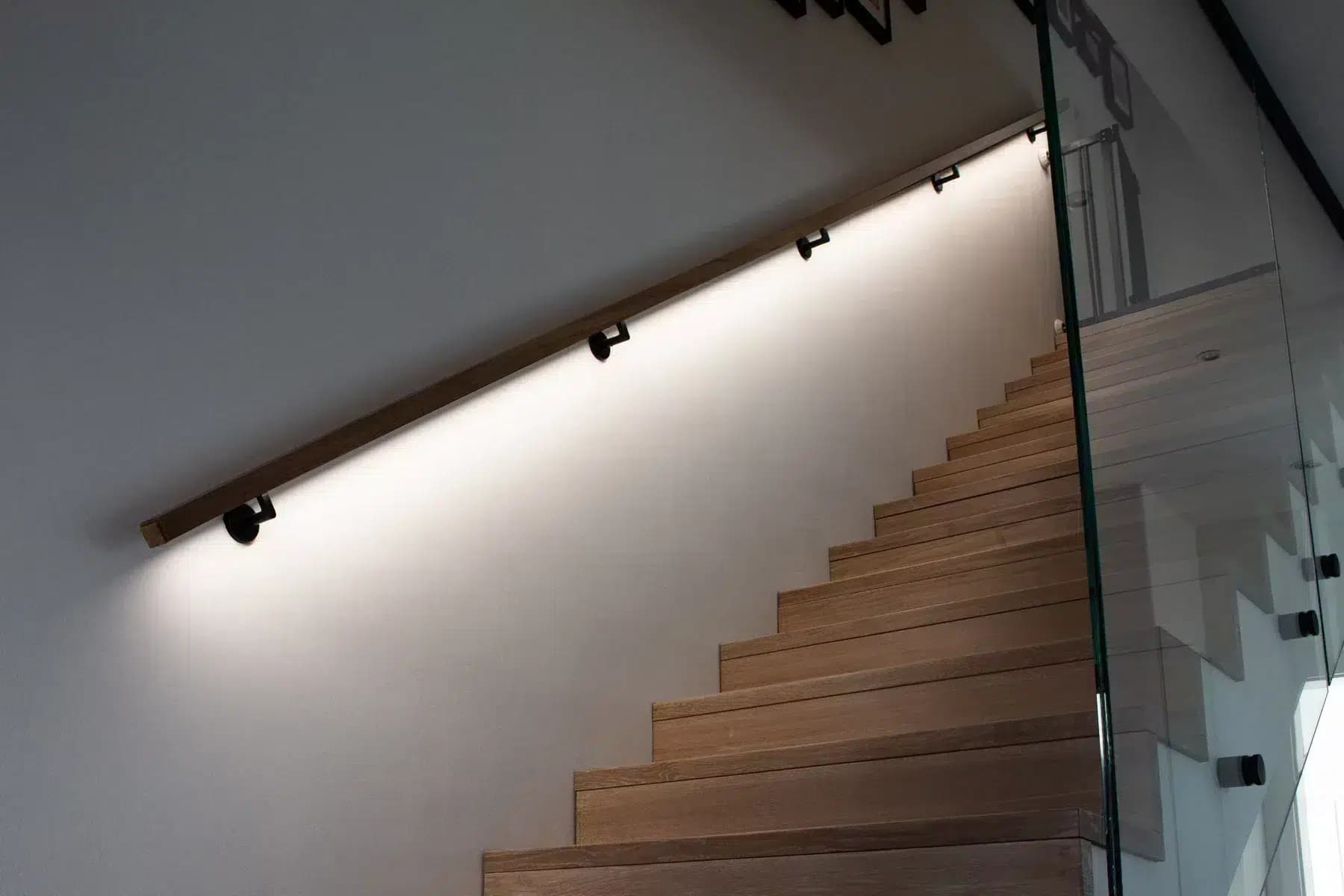
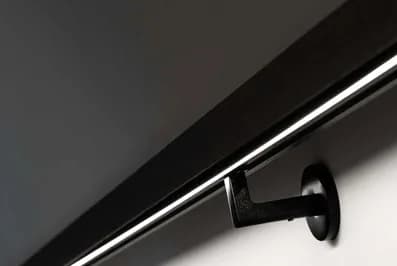
The handrail profile carries a continuous LED strip: marked stairs, soft light.
Made to measure — priced after survey
The product
A continuous strip housed in the channel groove: the stair is marked out without a ceiling light.
An illuminated handrail is not there to decorate, it is there so you can see where you are putting your foot. The strip sits in a groove in the profile and is diffused by a cover: the eye sees a line, not dots, and the nosing is lit without dazzling the person climbing. It is the only way to light a staircase without dropping the light from the ceiling into people's eyes.
The figures that matter are electrical. The strip runs on 24 V DC, fed from 220–240 V AC through a transformer. It draws 6 W per metre for 337 lumens, with 144 LEDs per metre and an 80° beam angle. The colour temperature is 4000 K — neutral white, neither the yellow of a living room nor the bluish white of a car park — and the whole thing is dimmable.
The protection rating is IP66: the assembly withstands driving rain and jet washing, so it takes outdoor use. The strip can be cut every 55 mm, which sets the real cutting pitch — a 3.42 m line of light does not exist, you land on the lower multiple and make up the difference at the end.
What is decided during installation is the cable. Before ordering you have to settle where the supply comes from, where the transformer sits — dry, ventilated, accessible — and how the drop runs: in the wall, in a post, or in the first support. Resolved after the event, it always shows. In Switzerland, connection to 230 V is reserved to an installer holding a licence: we install the profile, block the glass and pull the cable to the connection point, and the electrician makes the connection and carries out the inspection.
The range
Each section drawing is that of the system as actually installed. The dimensions beside it are the values the system is approved for, not ballpark figures.
ML-10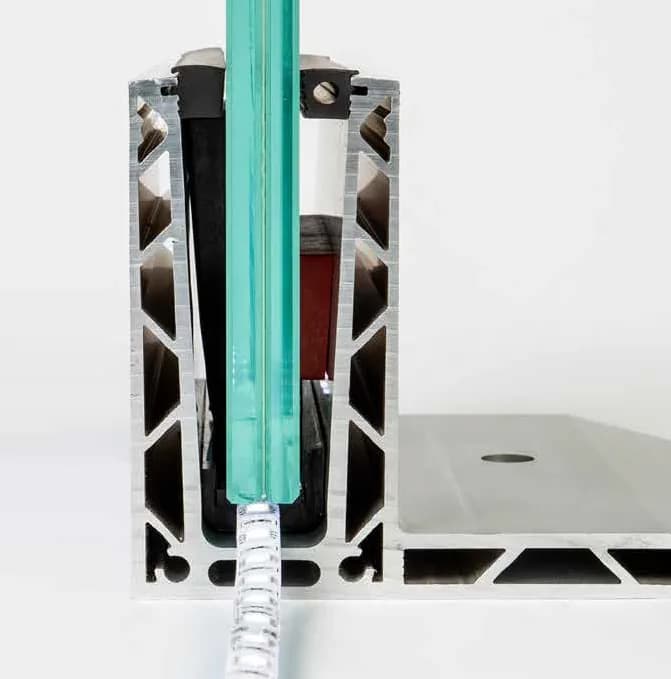 ML-40
ML-40Compare
The profile changes according to what it carries: a wall, a glass panel, or nothing but itself. The electrical characteristics, on the other hand, are common to the whole range — 24 V, 6 W/m, 337 lm/m, 4000 K, IP66.
| Model | Application | Glass thickness | Approved load | Fixing centres | Lengths | Mill finish | Anodised | Curvable |
|---|---|---|---|---|---|---|---|---|
| ML-10Wall-mounted LED handrail, aluminium | Private, commercial and public | Sans objet — pose murale | — | 2 supports par 2,5 m · 4 par 5 m | 2,5 m · 5 m | |||
| ML-20Glass-mounted LED handrail | Private, commercial and public | 12 – 21,52 mm | — | 2 supports par 2,5 m · 4 par 5 m | 2,5 m · 5 m | |||
| ML-30Timber LED handrail, wall-mounted | Private, internal only | Sans objet — pose murale | — | 2 supports par 2,5 m · 4 par 5 m | 2,5 m · 5 m | |||
| ML-40Balustrade channel with integrated LED | Private, commercial and public | 12 – 21,52 mm | — | — | 2,5 m · 5 m |
The loads shown are those the system is approved for. Final sizing depends on the use of the space and the wind pressure at the site — that is what we check during the survey.
Downloads
A4 data sheets, one per profile: vertical section, dimensions, finishes. Final dimensions are set at the site survey.
Non-contractual documents · Current edition
Downloads
Mounting instructions, brochures, technical data sheets and certifications for the systems we install, in their original version.
One PDF drawing per article number, served by the manufacturer.
Finish
The body is aluminium — mill finish for coating in any RAL, naturally anodised or stainless-steel look — or timber for internal use. The strip cover, however, is always opal: it is what turns 144 dots per metre into a continuous line. Replacing it with a clear cover to gain output does exactly the opposite and produces a string of dots.
On coated work, order the end caps and cable-drop covers in the same batch as the profile. A part coated six months later does not land on the same colour, and on a handrail lit from below the difference shows twice: once in daylight, once under the LED.


The drawing
Every piece starts from a workshop drawing dimensioned to the half-millimetre. That is what guarantees a true line once on site.
Installed
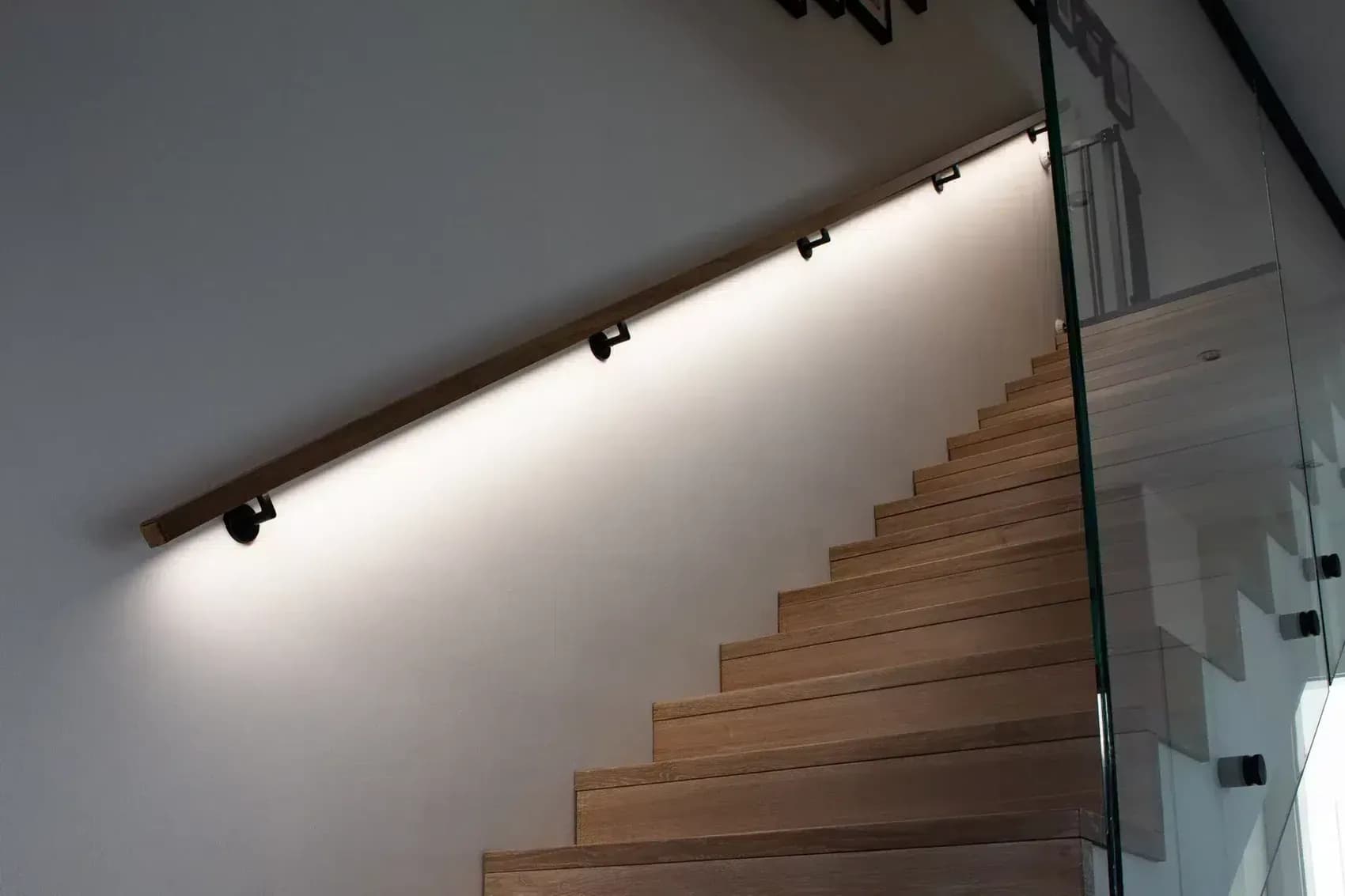
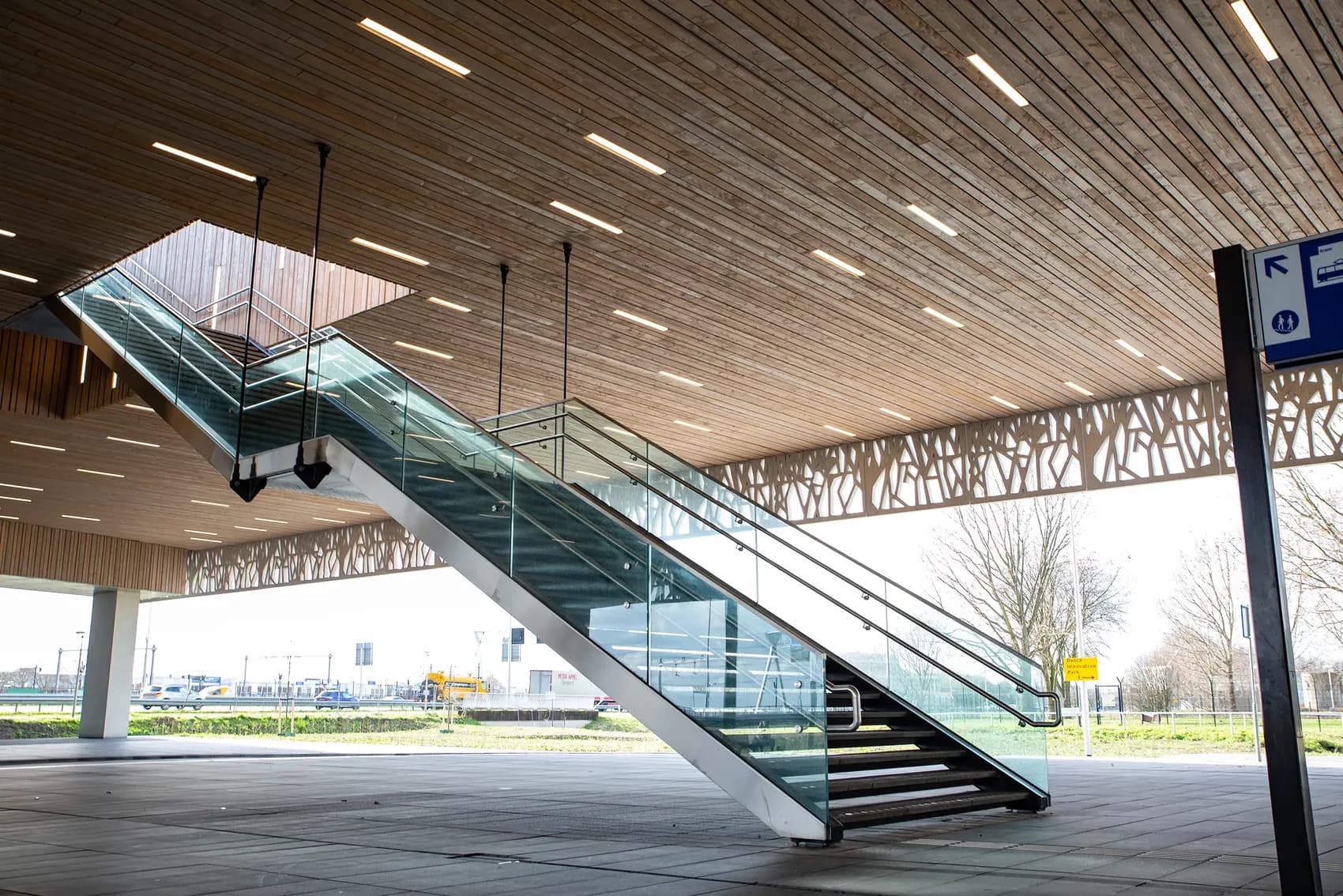
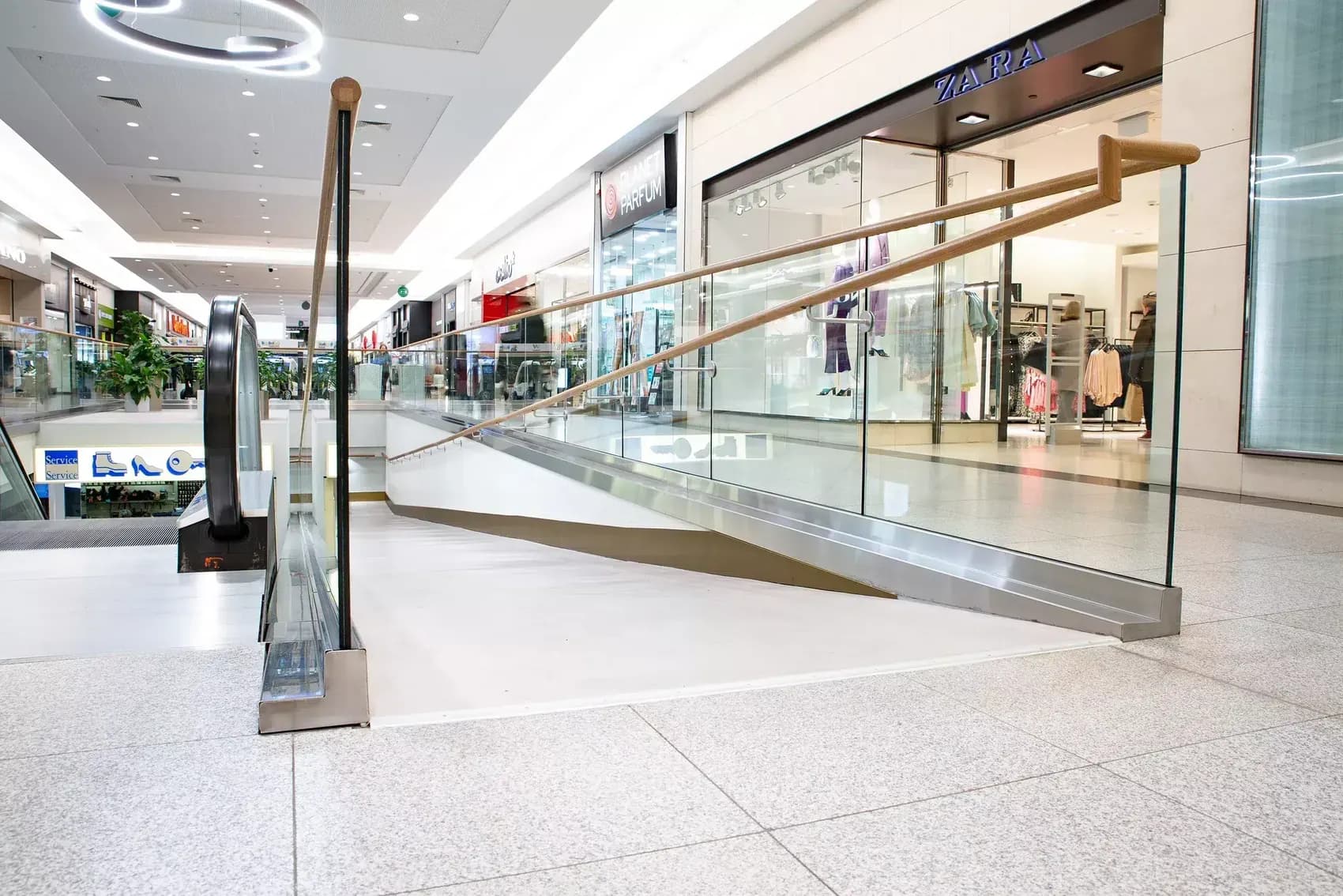
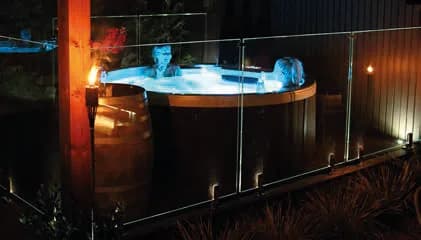
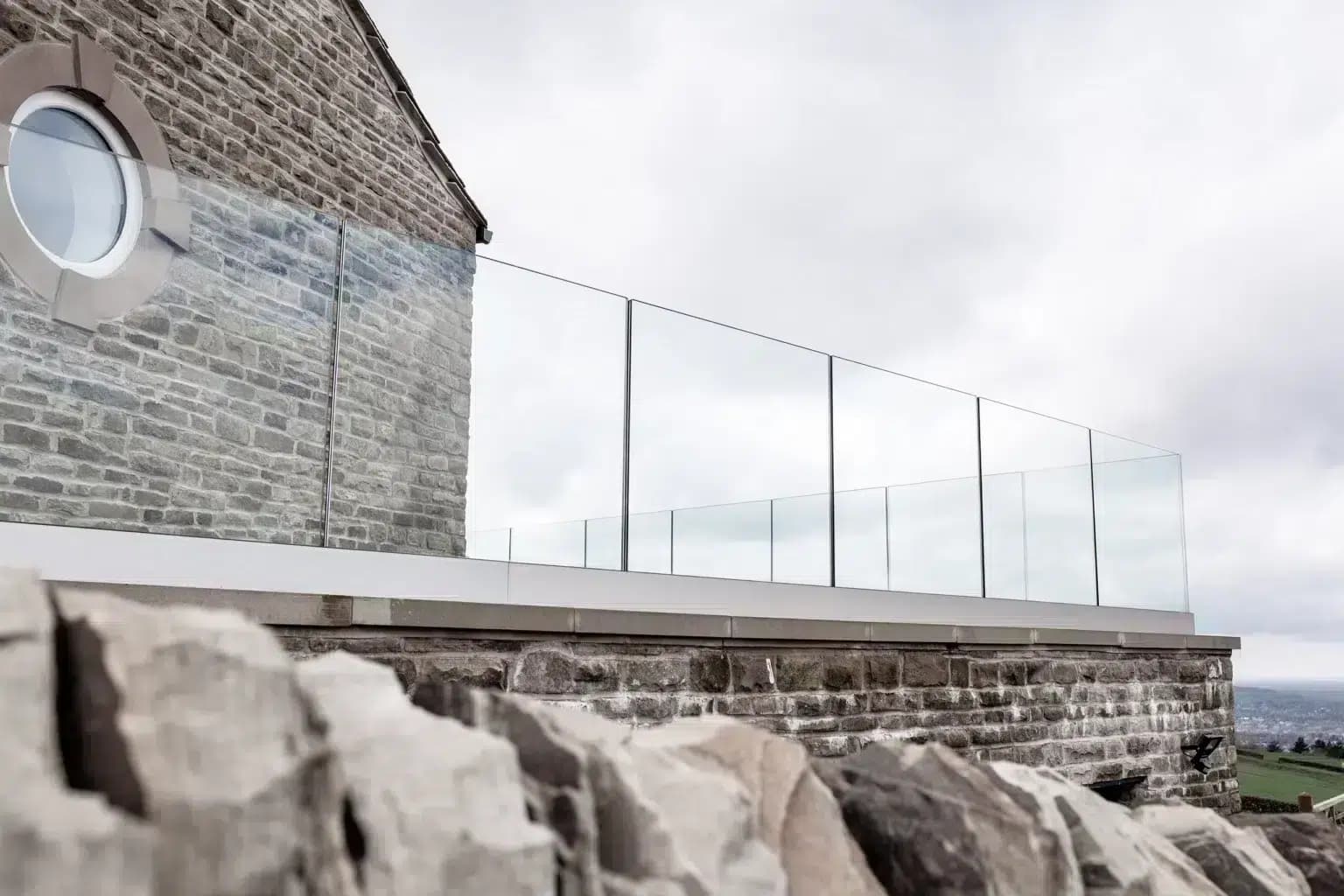
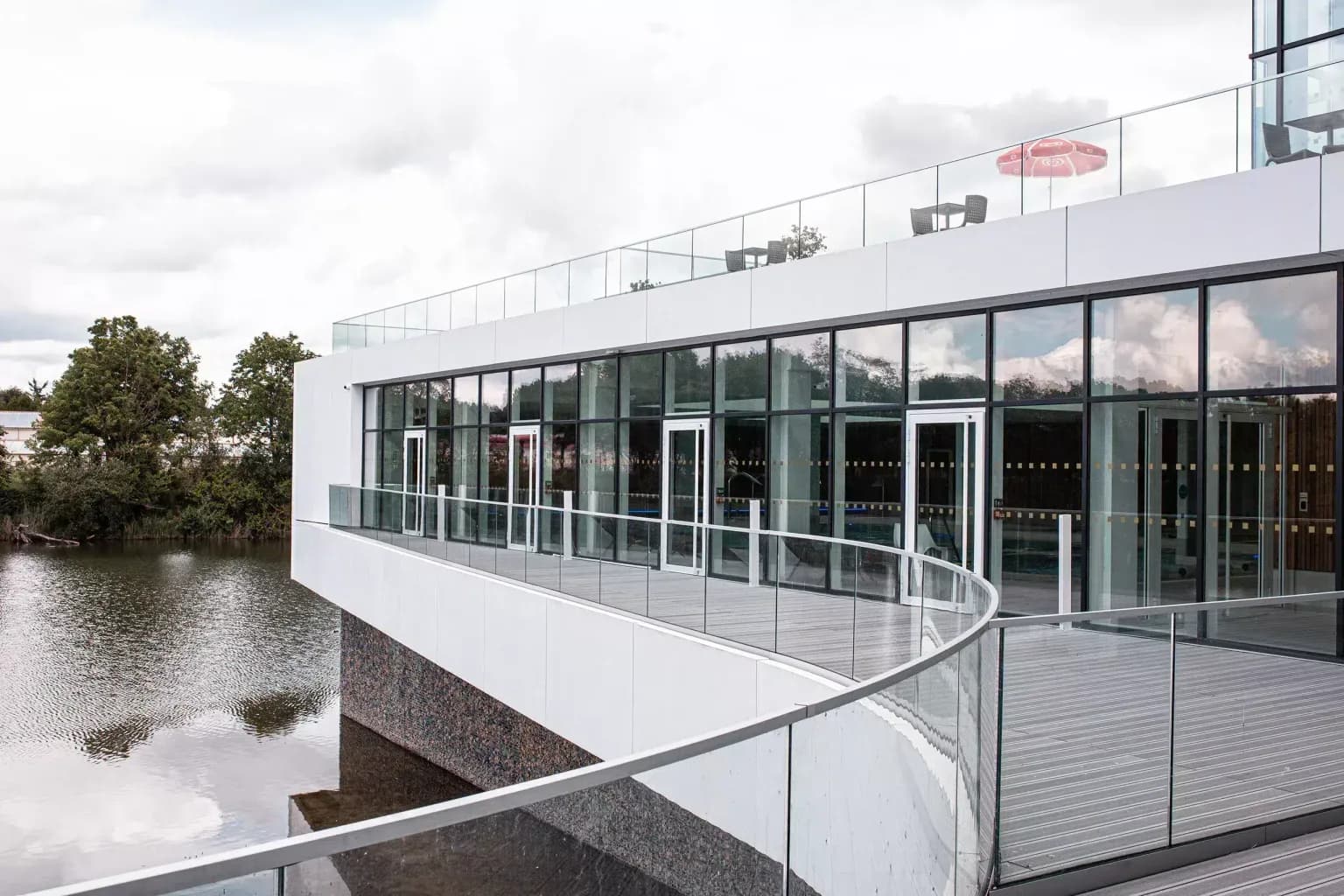
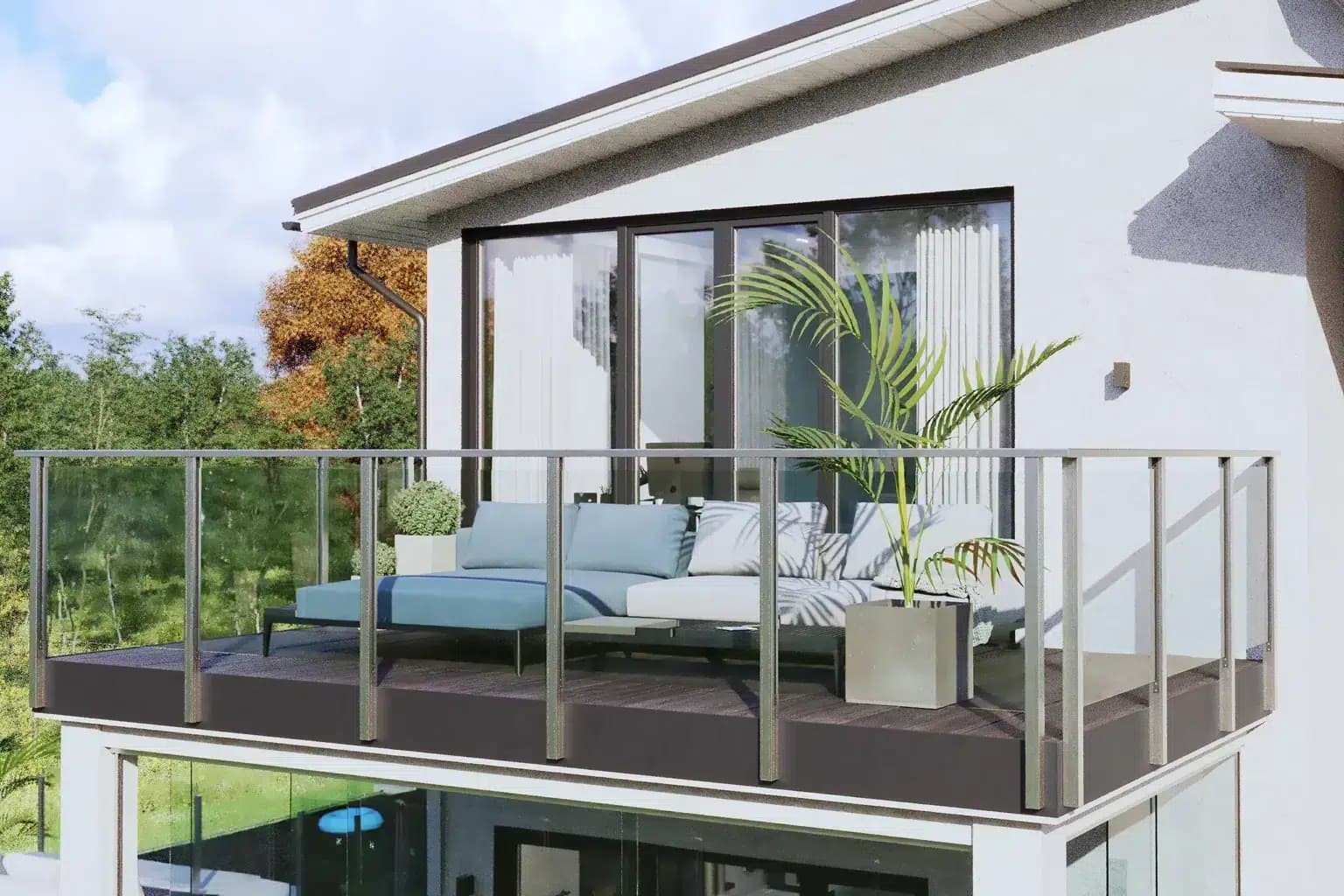
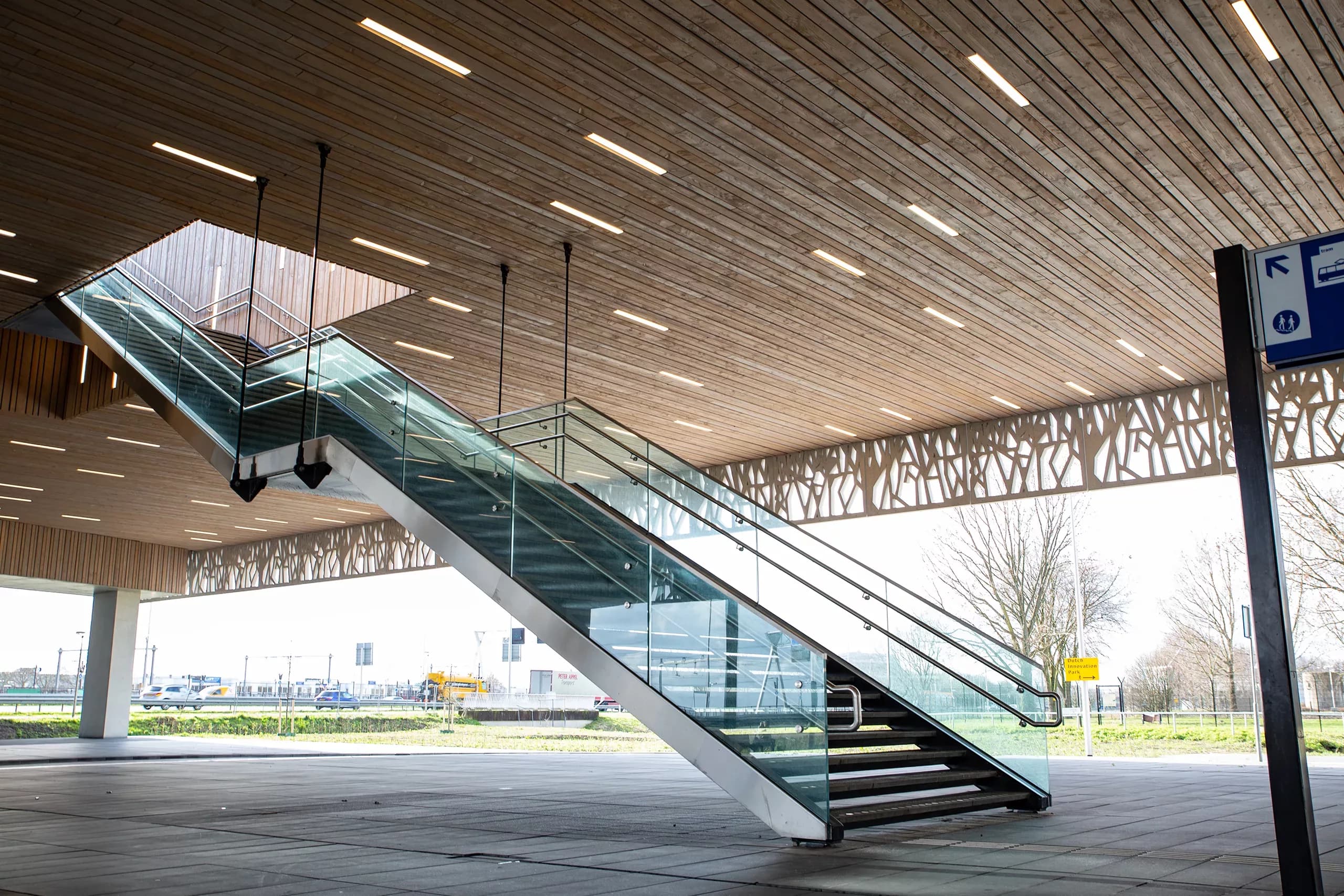
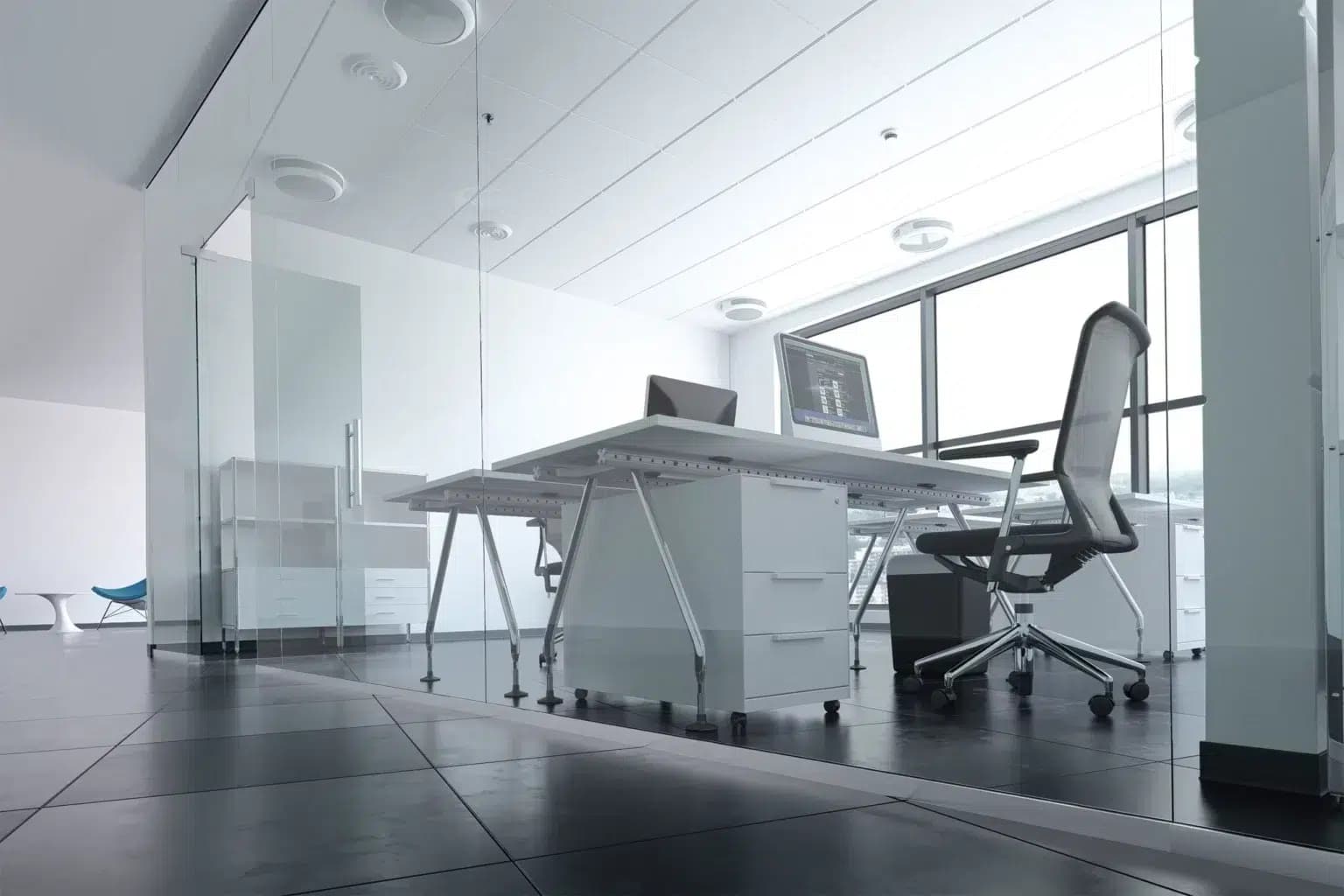
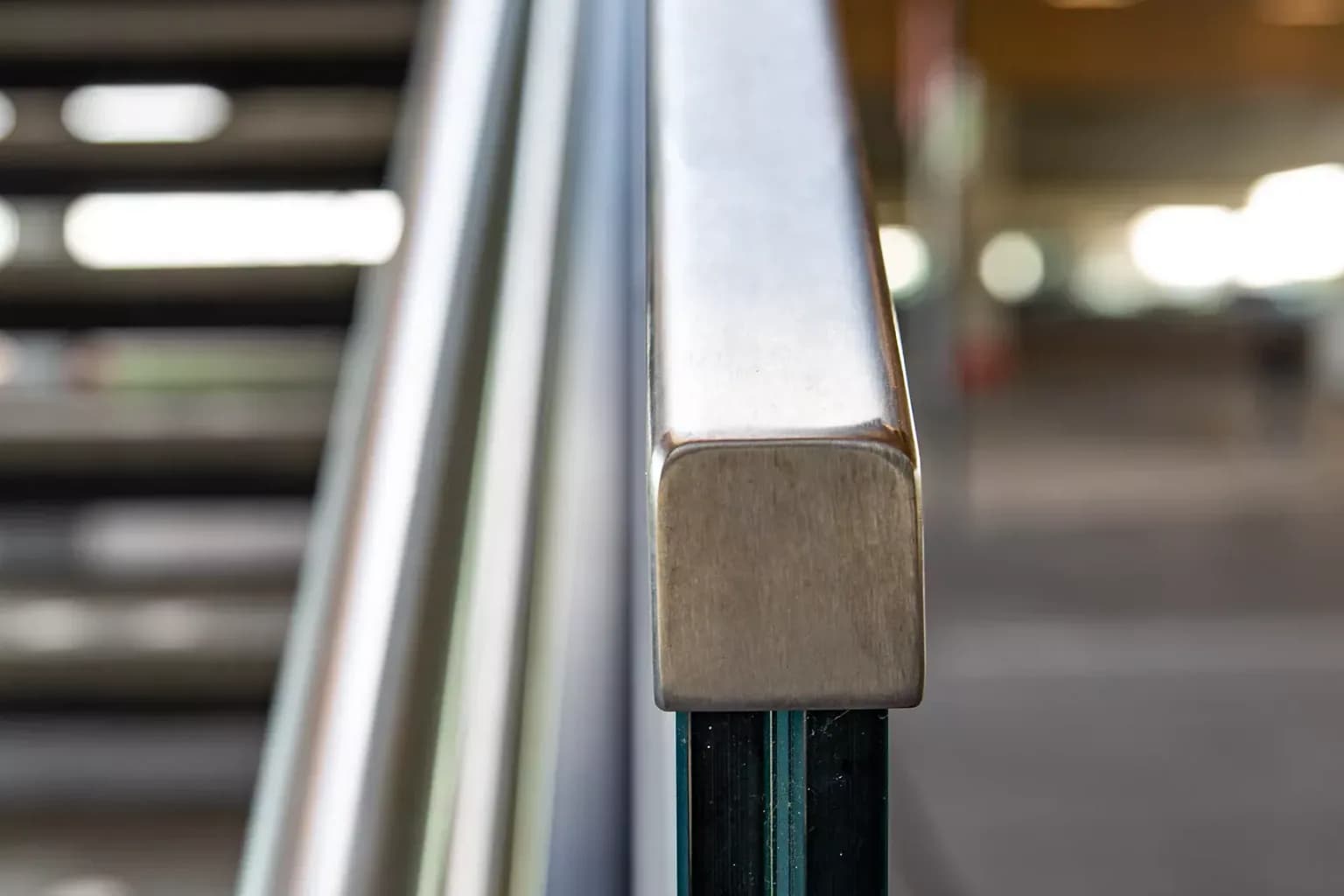
Views of systems equivalent to the ones we install. Our own projects will fill this page as they are handed over.
Frequently asked questions
4000 K, neutral white. It is the compromise that renders the contrast of the nosing: below it, warm light flattens the relief; above it, you fall into the cold white of plant rooms. On a staircase it is the legibility of the step that decides, not the mood of a living room.
Yes, the system is dimmable. The dimmer must be compatible with 24 V DC on the secondary side, or control the transformer itself. A conventional lamp dimmer placed upstream of an LED driver makes the strip flicker and shortens its life.
Somewhere dry, ventilated and accessible. A transformer walled into a partition is a future fault you will pay for in demolition. Its position is settled on the drawing, with the electrician, before the profile is ordered.
At 6 W per metre, the driver is sized on the total length plus around 20 % reserve. On long runs you feed from both ends: otherwise the voltage drop reads as a gradient at the end of the line.
Every 55 mm — that is the pitch of the cutting points. The profile, by contrast, is cut to the exact dimension. The difference is taken up at the end cap, never by pulling on the strip or bending it round the corner.
Yes: IP66, so driving rain and jet washing. What does not survive outdoors are improvised joints. They must stay inside the profile or in a sealed box, and the cable must never rise into a connector as a drip loop.
Yes. The cover unclips and the strip is changed without removing the profile or touching the glass. That is precisely why the cover is never bonded, even when it stands slightly proud after installation.
No. The strip sits in a groove and plays no structural role. The load transfer remains that of the channel: 0.6 kN/m in dwellings and offices, 1.0 kN/m in assembly and retail areas, 3.0 kN/m in high-density spaces.
A licensed electrical installer. Our part stops at the connection point: profile installed, glass blocked, cable pulled and labelled. Connection to the mains and the final inspection are the electrician's responsibility, and the safety certificate forms part of the file.
The profile bends, the rigid strip does not. On a radius you have to segment — strip cut every 55 mm with flexible links — and the result is never as even as on a straight run. That is a decision to take before drawing the curve, not after.
The order of magnitude runs from 250 to 600 CHF per linear metre, supplied and installed, excluding the power supply and electrical works. The cable drop and drilling the substrate often weigh more than the profile itself.
The systems we install are certified, LED section included. We attach the test reports and technical data sheets for the chosen system to the quote.
The systems we install are certified
 SIA 261Loads — Swiss standard
 CEEuropean conformity
 BS 6180Balustrades — building
 AbP LGAApproved German testing
 CCFATFrench technical approval
 KOMOSKG-IKOB certification
 RPF 14VEROTEC test laboratory
Next step
This category is measured on site. The catalogue carries every dimension in the range — worth keeping to hand on site.
Made to measure — priced after survey
Would you rather we handled it? Request a quote — site survey, supply and installation included.